Description
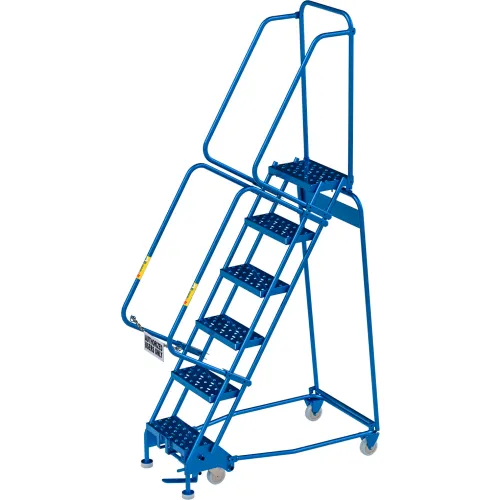
The STEEL ROLLING LADDER 6-STEP 24″ BASE 16″ STEP WIDTH is a mobile access solution designed for industrial facilities, warehouses, and manufacturing environments where workers need safe, efficient vertical reach to shelving, equipment, and storage systems. This rolling ladder combines heavy-duty steel construction with industrial-grade mobility to provide reliable access across multiple work zones without permanent installation.
Built for demanding industrial applications, this 6-step rolling ladder features a sturdy 24-inch base width that delivers exceptional stability and a low center of gravity, while the 16-inch step width accommodates workers in safety boots and provides comfortable footing at each level. The ladder reaches 60 inches to the top step, offering workers 8-10 feet of total vertical access when accounting for average standing height. The 10-inch step depth provides ample surface area for safe foot placement, and the non-locking caster design allows smooth movement across warehouse floors, manufacturing facilities, and distribution centers. The all-steel construction resists corrosion in industrial environments and withstands the rigorous daily use typical of high-traffic facilities. Weighing approximately 80-90 pounds, this unit balances durability with maneuverability, making it suitable for single-operator repositioning between work stations.
Industrial maintenance teams, warehouse operations staff, inventory management personnel, and facility supervisors rely on mobile rolling ladders for accessing high shelving units, overhead equipment, electrical panels, HVAC systems, and storage racks. Common applications include picking and restocking operations in distribution centers, equipment maintenance in manufacturing plants, inventory audits in warehousing operations, and general facility maintenance across industrial, retail, and commercial spaces. Organizations managing multiple work zones benefit from rolling ladder mobility, as units can be quickly repositioned without requiring wall-mounted or stationary ladder infrastructure at every location. Facilities with ANSI and OSHA compliance requirements utilize rolling ladders as part of comprehensive fall prevention and worker safety programs.
When selecting a rolling ladder for your facility, evaluate the required reach height by measuring from floor level to the highest point workers need to access, then verify that the ladder’s top-step height plus average worker reach meets or exceeds that distance. Consider your facility’s floor surface—smooth concrete and sealed floors work best with standard rolling casters, while uneven or textured surfaces may require reinforced or locking caster systems. Assess your available floor space and aisle widths to ensure the 24-inch base width fits your operational layout, and confirm that the 16-inch step width matches your organization’s safety footwear requirements and worker comfort standards. Verify compliance with local building codes and OSHA regulations applicable to your industry, and cross-reference any facility-specific access height or load capacity requirements. Choose between standard rolling models for general-purpose mobility or specialty configurations if your environment involves ramps, inclines, or irregular flooring conditions.
What size clearance do I need in my warehouse aisles to maneuver a 24-inch base rolling ladder?
The 24-inch base width requires a minimum aisle clearance of approximately 30-36 inches for safe operational maneuvering, allowing adequate space to position, steer, and reposition the ladder between work zones. Most standard warehouse aisles of 48 inches or wider comfortably accommodate this ladder model, though you should verify your facility’s specific aisle dimensions before purchase. If space is constrained, consider the turning radius requirements—narrower aisles may necessitate rolling models with swivel caster designs for improved maneuverability.
How do I ensure worker safety when using a mobile rolling ladder in a high-traffic facility?
Implement comprehensive safety protocols including designated lane markings to separate ladder traffic from forklift and equipment operation, require workers to secure the ladder against movement before climbing, establish clear communication procedures when rolling ladders between zones, and provide worker training on proper climbing techniques and load distribution. Position the ladder on level, clear flooring free of obstacles and spills, and deploy warning signs or spotters when operating in congested areas. Many facilities integrate rolling ladders into OSHA-compliant access systems that include slip-resistant treads, guardrails, or hand-hold features to minimize fall risk and worker injury incidents.
What is the difference between a rolling ladder and fixed wall-mounted access equipment?
Rolling ladders provide flexible vertical access that can be repositioned throughout your facility to serve multiple work zones without permanent installation, making them ideal for dynamic warehouse environments where inventory locations change frequently. Fixed access equipment like wall-mounted stairs or permanent ladder systems require significant capital investment, facility modification, and are suitable only for consistent, high-frequency access points. Rolling solutions offer superior operational flexibility, faster deployment, and the ability to consolidate equipment across multiple locations, reducing the total cost of facility access infrastructure while maintaining worker safety and productivity.
Stock availability and expedited shipping options ensure rapid deployment to your facility—contact our industrial supply team for current inventory status and delivery scheduling.
“`


Reviews
There are no reviews yet.