Description
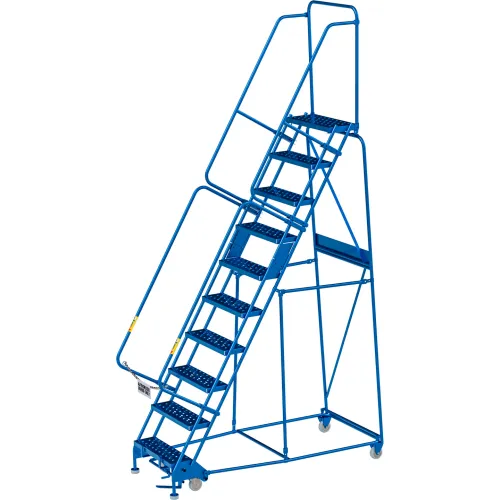
The Steel Rolling Ladder 10-Step 32″ Base 24″ Step Width is a heavy-duty mobile access solution designed for industrial warehouses, manufacturing facilities, and retail environments requiring frequent vertical reach. This ladder combines commercial-grade construction with mobility features, making it ideal for personnel who need safe, reliable access to elevated inventory, equipment, and storage areas.
Built with a sturdy steel frame and precision-welded construction, this 10-step rolling ladder delivers exceptional stability and load capacity for industrial applications. Key specifications include a 32-inch base width for enhanced stability, 24-inch step width for comfortable foot placement, and a total height of 100 inches to the top step, providing 8-10 feet of vertical reach depending on user height. The 10-inch step depth offers secure footing, while the non-locking design allows for easy maneuverability across warehouse floors, retail spaces, and manufacturing areas. Heavy-gauge steel construction ensures durability in demanding industrial environments, and the rolling caster base eliminates the need for lifting and repositioning—a critical safety feature for facilities managing high-volume access tasks. The ladder meets standard industrial safety specifications and is suitable for general commercial use in non-regulated applications.
This rolling ladder serves a broad range of industrial and commercial sectors. Manufacturing plants use rolling ladders for equipment maintenance and assembly line access. Warehouse and distribution centers rely on them for inventory management and product retrieval from elevated shelving. Retail stores utilize rolling ladders for stocking shelves, reaching upper displays, and merchandise organization. Food service facilities, automotive shops, and logistics centers all benefit from the mobile access this ladder provides. Facilities managers appreciate the efficiency gain—workers can quickly position themselves without removing a stationary ladder from storage, reducing downtime and improving workflow. The rolling design is particularly valuable in high-traffic environments where fixed ladders would create safety hazards or operational bottlenecks.
When selecting a rolling ladder for your facility, prioritize load capacity ratings relative to your workers’ weight and any tools or materials they’ll carry while elevated. Verify the step height and vertical reach meets your specific access requirements—measure from floor to the highest point you need to reach and account for user height. Examine base width and stability features carefully; a wider base provides greater stability on uneven floors, though it requires more floor space. Consider step depth and width in relation to your workers’ footwear and comfort level during extended use. Evaluate caster quality and floor compatibility—industrial-grade locking casters should move smoothly on concrete, tile, and sealed floors without marking or damage. Check whether your facility requires OSHA compliance or specific regulatory certifications for your industry. Finally, assess durability features like paint finish, rust resistance, and weld quality, as these factors directly impact long-term maintenance costs and worker safety in demanding environments.
What is the maximum weight capacity for this rolling ladder?
The Steel Rolling Ladder 10-Step is engineered for industrial use with a substantial load capacity designed to support typical workers and light tool loads. Always verify the specific weight capacity rating with your supplier and ensure compliance with your facility’s safety protocols. Load capacity depends on proper weight distribution across the step and base, so avoid concentrating weight on a single corner or edge. For facilities with workers exceeding standard weight ranges or requiring transport of heavy tools, verify capacity before use.
How do I safely position and use a rolling ladder in a busy warehouse?
Position the rolling ladder on level, clear flooring away from traffic paths and obstacles. Engage all caster locks if your model includes them, or ensure casters are fully engaged before climbing. Always have a co-worker stabilize the ladder base while another person climbs—never assume rolling casters alone provide sufficient stability. Maintain three points of contact while ascending or descending, and never lean excessively to the side. Keep the ladder positioned directly underneath or slightly behind your work area to minimize reaching. After use, position the ladder against a wall or in designated storage to prevent accidental rolling into walkways. Brief all personnel on proper ladder safety, and establish facility policies governing rolling ladder use in high-traffic areas.
What is the difference between a rolling ladder and a fixed step ladder for industrial use?
Rolling ladders feature mobile caster bases allowing repositioning without manual lifting, making them ideal for environments requiring frequent access to multiple locations. Fixed step ladders remain stationary and require physical relocation between work areas, increasing labor time and repetitive strain. Rolling ladders optimize workflow in warehouses and retail environments where workers access multiple elevated points throughout their shift. Fixed ladders suit smaller facilities or locations where access needs are concentrated in specific areas. Rolling ladders demand more floor space and require smooth, level flooring for safe operation. Fixed ladders are more compact for storage. Choose rolling ladders for high-volume, multi-location access scenarios, and fixed ladders for single-point or limited-access applications.
Order the Steel Rolling Ladder 10-Step 32″ Base 24″ Step Width today—we maintain stock for fast shipping to your facility with flexible delivery options.
“`


Reviews
There are no reviews yet.