Description
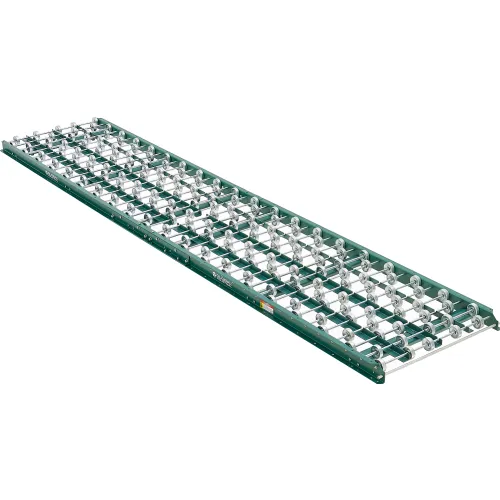
The RIGID SKATE WHEEL CONVEYOR 10FT 24″ is a heavy-duty roller conveyor system engineered for efficient material handling across production floors, warehouses, and distribution centers. This 10-foot gravity conveyor delivers reliable, low-maintenance performance for moving boxes, containers, and packages along assembly lines and shipping operations.
Key Features & Specifications
This skate wheel conveyor combines industrial-grade construction with practical design elements that warehouse managers and logistics professionals depend on. The system spans 10 feet in total length with a 24-inch frame width, providing a standardized footprint that integrates seamlessly into existing conveyor systems and workstations. With a load capacity of 35 lbs per foot of conveyor length, this unit can handle substantial daily throughput without compromising durability or safety. The conveyor features 13 wheels per foot of length, ensuring even weight distribution and smooth product flow across the entire deck. Steel frame construction and precision-engineered skate wheels resist wear from continuous operation, making this an economical choice for high-volume material handling environments. The rigid roller design minimizes deflection under load, preventing product jams and maintaining consistent conveyor performance throughout your operation.
Applications & User Base
Skate wheel conveyors like this model serve diverse industries including manufacturing, e-commerce fulfillment, food and beverage processing, automotive assembly, and third-party logistics (3PL) operations. Quality assurance managers value this equipment for its ability to move products through inspection stations without motorized assistance—ideal for facilities where gravity-fed flow reduces energy consumption and operational costs. Small to mid-sized distribution centers frequently deploy these units as standalone conveyors or integrated sections within larger conveyor networks. Manufacturing facilities use skate wheel systems to stage materials between production cells, reducing bottlenecks and labor costs associated with manual material movement. Retailers and wholesalers leverage this conveyor type in receiving departments to quickly sort and route incoming shipments. The low-profile design makes it suitable for tight spaces, mezzanines, and raised platform work areas where powered conveyor systems prove impractical or cost-prohibitive.
Selecting the Right Skate Wheel Conveyor
When evaluating skate wheel conveyor systems for your operation, assess your typical product weight, flow rate requirements, and available floor space. Consider whether your products are uniform in size or highly variable—irregular items may require additional safety railings or side guides to prevent spillage. Evaluate the angle of installation; gravity conveyors function best on slight declines (typically 3-5 degrees), so measure your intended installation area carefully. Review bearing quality and wheel material specifications, as premium sealed bearings extend maintenance intervals and reduce downtime in dusty or wet environments. Calculate your throughput needs by multiplying the number of items per minute by their average weight to ensure the conveyor’s load capacity matches your volume. Inspect frame construction for corrosion resistance if your facility operates in damp conditions or handles corrosive materials. Finally, verify compatibility with upstream and downstream equipment using standard conveyor mounting brackets and connection points.
What size products can this 24-inch wide conveyor handle?
The 24-inch frame width accommodates products ranging from small parcels (as compact as 4-6 inches) up to larger boxes and containers approaching 20-24 inches in width. The critical factor is ensuring products don’t extend beyond the conveyor edges, which would create safety hazards and potential spillage. Consult the product’s dimensional specifications and your anticipated SKU dimensions before purchase to confirm compatibility.
How do I determine if a 10-foot conveyor is sufficient for my application?
Measure the distance between your loading point and unloading station to ensure the 10-foot length bridges that gap appropriately. Account for any elevation change needed (typically 6-12 inches of drop for proper gravity flow). If your required distance exceeds 10 feet, consider chaining multiple units together using connecting brackets, or select a longer model from the product line.
What is the difference between skate wheel and roller conveyors?
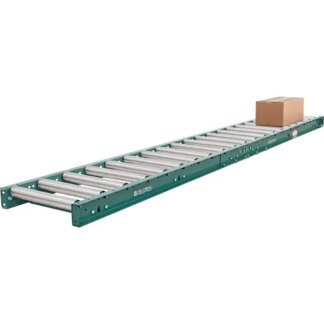
Skate wheel conveyors feature individual wheels mounted in a fixed frame that allow products to move via gravity without motorization, making them ideal for low-cost material staging. Roller conveyors use continuous rotating cylinders and typically require motor-driven power, offering faster controlled speeds and heavier load capacities. Skate wheel systems excel in facilities prioritizing simplicity, minimal maintenance, and energy efficiency, while powered roller systems suit high-speed, heavy-duty applications demanding constant throughput.
Order this RIGID SKATE WHEEL CONVEYOR 10FT 24″ (SKU: 293294) today and take advantage of fast, reliable shipping with same-week delivery availability on in-stock units.
“`




Reviews
There are no reviews yet.