Description
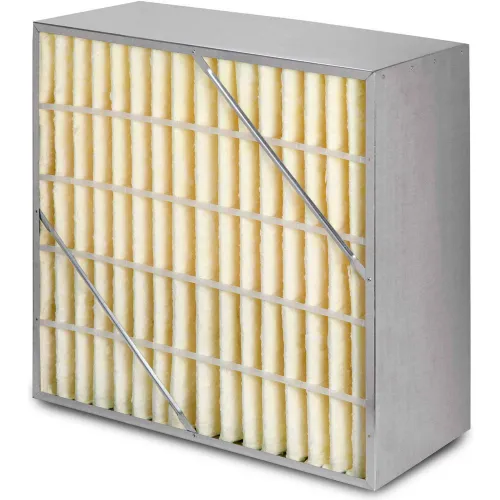
The RIGID CELL SPECIALTY FILTER 24x24x12 MERV 15 is a high-efficiency particulate air filtration solution engineered for demanding commercial and industrial HVAC applications. This rigid-frame filter removes 85% of particles 0.3–10 microns in size, making it ideal for facilities requiring superior indoor air quality and enhanced system protection.
Key specifications and features: This MERV 15 filter measures 24 inches by 24 inches by 12 inches, fitting standard plenum and ducted HVAC systems across manufacturing, healthcare, data centers, and pharmaceutical environments. The rigid cell construction provides structural integrity and resistance to collapse, unlike flexible media alternatives. The high-capacity synthetic fiber bed captures dust, pollen, mold spores, bacteria, and other airborne contaminants while maintaining optimal airflow and pressure drop characteristics. MERV 15 rating places this filter in the high-efficiency range—superior to MERV 13 filters yet more cost-effective than HEPA alternatives for most commercial applications. The 12-inch depth extends filter life and reduces maintenance frequency compared to standard 1-inch or 2-inch filters. This product is manufactured to strict industry standards and is compatible with most commercial rooftop units, split systems, and central air handling equipment requiring 24×24 face dimensions.
Common end-users and applications: Manufacturing facilities, pharmaceutical laboratories, hospitals and medical clinics, food processing plants, clean-room environments, office buildings, schools, and data centers all depend on filters of this caliber to maintain regulatory compliance and protect sensitive operations. In manufacturing, MERV 15 filters prevent equipment contamination and extend machinery lifespan. Healthcare facilities use them to reduce airborne pathogen transmission and meet Joint Commission and ASHRAE standards. Pharmaceutical and semiconductor cleanrooms rely on this filtration tier to maintain environmental specifications critical to product quality. Data centers employ these filters to protect expensive server infrastructure from dust accumulation and thermal degradation. Facilities managers and HVAC contractors specify MERV 15 rigid-cell filters when standard MERV 11 or MERV 13 filters no longer meet operational demands or regulatory requirements.
What to consider when selecting this filter: Verify that your HVAC system’s blower capacity and ductwork design accommodate the pressure drop of MERV 15 filtration—high-efficiency filters require greater static pressure than lower-rated alternatives. Confirm your equipment’s filter slot depth accepts 12-inch media; some systems require custom frames or retrofitting. Calculate filter replacement frequency based on facility occupancy, outdoor air intake rates, and dust load—this depends on geographic location, season, and operational intensity. Establish a filter change schedule; rigid-cell filters typically require replacement every 6–12 months in commercial settings, though heavily contaminated environments may require more frequent changes. Purchase filters with proper sealing gaskets and frame construction to prevent bypass leakage, which compromises filtration efficiency. Consider bulk purchasing and establish vendor relationships to ensure consistent supply and reduce per-unit costs. Evaluate total cost of ownership, including material price, labor for installation, and energy consumption—higher-efficiency filters consume more energy but deliver better contamination control and equipment protection. Ensure your facility has documented HVAC maintenance procedures and staff training for safe filter installation and disposal.
What size HVAC systems accept the 24x24x12 filter?
The 24x24x12 format is standard for commercial HVAC equipment rated between 1,500 and 5,000 CFM (cubic feet per minute), including rooftop units, air handling units, and cabinet-style systems serving small-to-medium commercial spaces. Verify your equipment specifications before ordering; filter dimensions must match your system’s filter rack or plenum opening exactly. Most standard commercial air handlers, split systems, and VAV (variable air volume) installations accommodate this size, but custom or legacy systems may require different dimensions. Check your equipment manual or contact your HVAC service provider if uncertain.
How often should I replace a MERV 15 filter of this size?
Replacement intervals typically range from 6 to 12 months in normal commercial environments, though factors including facility type, outdoor air intake percentage, occupancy levels, and local air quality significantly affect actual change frequency. Facilities in dusty industrial areas or with high outdoor air percentages may require quarterly changes. Healthcare facilities and cleanrooms often implement monthly inspections and more frequent replacement to maintain regulatory compliance. Monitor pressure drop across the filter using a manometer; when differential pressure reaches the manufacturer’s maximum specification (typically 0.50 to 0.75 inches water column), schedule replacement immediately to prevent system strain and bypass leakage.
What is the difference between MERV 15, MERV 13, and HEPA filters?
MERV 15 captures 85% of particles 0.3–10 microns, offering excellent contamination control without the operational burden of HEPA systems. MERV 13 captures approximately 75% of particles in the same range and costs less, making it suitable for standard commercial applications where air quality




Reviews
There are no reviews yet.