
Description
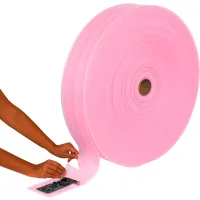
Perforated anti-static air foam rolls provide lightweight cushioning protection for electronic components, circuit boards, and sensitive equipment during storage and transit. These rolls combine air-filled bubble technology with conductive anti-static properties, making them essential for industries where electrostatic discharge (ESD) protection is critical.
Key Features and Specifications
These 12-inch wide perforated anti-static foam rolls deliver consistent performance across demanding shipping and packing applications. Each roll measures 550 feet in length with 1/8-inch thickness, providing substantial coverage per unit while maintaining optimal cushioning density. The perforated design allows for easy tearing and custom sizing, eliminating waste and streamlining packing workflows. The distinctive pink color serves as a visual identifier for anti-static material in your warehouse, reducing the risk of mixing standard packaging with ESD-protected supplies. The air-filled cellular structure provides excellent shock absorption while remaining lightweight, which helps reduce shipping weight and dimensional charges. Manufactured with conductive properties, this foam roll meets ESD standards for protecting sensitive electronics, including semiconductors, microprocessors, and precision instruments. The six-roll quantity per case ensures ample supply for high-volume operations while simplifying inventory management. This material is ideal for both internal protection layers and outer wrapping applications.
Industries and Applications
Electronic manufacturers, computer assembly facilities, semiconductor distributors, and telecommunications equipment providers rely on anti-static foam rolls to prevent costly damage from electrostatic discharge during production, warehousing, and distribution. Contract manufacturers and fulfillment centers use these rolls for protective wrapping of printed circuit boards (PCBs), server components, memory modules, and networking equipment. Medical device manufacturers incorporate anti-static foam into packaging specifications for diagnostic equipment and electronic instruments. Automotive suppliers utilize these rolls for protecting electronic control modules and sensor components. IT resellers and data center operators use anti-static foam for equipment refurbishment and relocation. The perforated format is particularly valued in high-speed packing operations where workers need to quickly tear appropriately-sized pieces without scissors or box cutters, improving efficiency while maintaining product protection standards. Industries requiring documented ESD compliance benefit from using clearly-marked pink foam that demonstrates adherence to handling protocols during audits.
What to Consider When Purchasing Anti-Static Foam Rolls
When selecting anti-static foam roll products, verify that materials meet applicable ESD standards such as ANSI/ESD S541 or IEC 61340-5-1 specifications for your industry. Evaluate the surface resistivity and volume resistivity ratings to ensure compliance with your equipment protection requirements. Consider the foam thickness in relation to your products—1/8-inch thickness suits moderate protection needs, while heavier items may require additional layering. Assess whether the perforated design matches your packing line speed and worker preferences; perforated rolls reduce prep time compared to non-perforated alternatives. Calculate total linear footage needed annually to determine whether bulk case quantities provide cost advantages. Verify that the width accommodates your standard box dimensions to minimize waste. Confirm storage conditions in your facility, as anti-static foam should be kept away from moisture and extreme temperatures that could compromise conductive properties. Request specification sheets documenting ESD certification for compliance documentation. Compare cost per linear foot across different suppliers, as pricing varies significantly based on material composition and conductivity levels.
What size foam should I use for wrapping circuit boards?
For most circuit boards and PCB assemblies, 1/8-inch thickness provides adequate shock absorption while remaining compact for standard shipping containers. The 12-inch width allows you to wrap boards efficiently—simply tear to desired length using the perforated design. For larger assemblies or fragile components, consider using multiple layers or combining with other protective materials. Always ensure complete coverage of component surfaces to maintain ESD protection throughout transit.
How do I confirm this foam meets anti-static requirements?
Verify ESD compliance by requesting documentation of surface and volume resistivity testing. Products meeting ANSI/ESD S541 standards should be clearly labeled. The pink color indicates anti-static properties, but always request certificates of compliance for your quality assurance records. Test the material’s conductivity using an ohmmeter if performing internal verification—proper anti-static foam typically shows resistivity within 10^4 to 10^9 ohms range depending on specific application requirements.
What’s the difference between perforated and non-perforated anti-static foam rolls?
Perforated foam includes pre-cut lines allowing easy hand-tearing to custom sizes without tools, improving packing efficiency and reducing material waste. Non-perforated rolls require cutting implements, consuming more time and labor. For high-volume operations, perforated designs significantly increase throughput. Both provide identical anti-static protection; the difference is purely in usability and workflow optimization. Choose perforated for fast-paced environments where speed matters.
Order your six-roll





Reviews
There are no reviews yet.