
Description
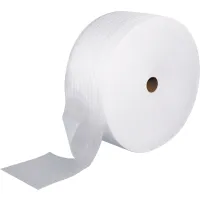
Perforated air foam rolls deliver lightweight, cushioned protection for fragile items during storage and transit, making them an essential material for shipping departments, warehouses, and fulfillment centers. This three-roll bundle of 24-inch-wide perforated foam provides economical coverage for wrapping, void-fill, and product protection across high-volume shipping operations.
Key Features and Specifications
These perforated air foam rolls measure 24 inches wide by 1,250 feet long per roll, with a 1/16-inch thickness that balances cushioning performance with material efficiency. The white polyethylene construction offers excellent visibility when packing boxes and identifying wrapped items, while the perforated design allows for easy, clean separation by hand—no cutting tools required. Each roll is tightly wound to minimize storage footprint, and the three-roll quantity ensures consistent supply for medium to large shipping operations without frequent reordering. The lightweight composition reduces dimensional weight charges on outbound shipments, directly lowering your shipping costs. This material is non-abrasive, meaning it won’t scratch or damage surfaces of electronics, machinery parts, cosmetics, or other sensitive products. The foam also provides moisture protection and acts as a thermal buffer, making it suitable for temperature-sensitive shipments.
Applications and Industry Use
E-commerce fulfillment operations, logistics providers, and distribution centers rely on perforated foam rolls for daily packing and wrapping tasks. Manufacturers shipping finished goods, replacement parts, or components use this material to prevent product damage during transit and warehousing. The food and beverage industry employs foam rolls for insulation and cushioning in cooler boxes and cold-chain logistics. Electronics distributors and retailers use perforated foam to wrap items ranging from small circuit boards to larger appliances, protecting against impacts and vibration during transport. The healthcare and pharmaceutical sectors value this material for its protective qualities and ease of handling. Retailers preparing gift boxes and specialty packaging appreciate the professional appearance and easy tear-off functionality. Machine shops and industrial suppliers wrap metal parts, precision tools, and heavy equipment components to prevent corrosion and physical damage.
What to Consider When Selecting Foam Packing Materials
Evaluate your shipping volume and frequency to determine if bulk roll quantities suit your operation’s pace and storage capacity. Consider the product weight and fragility level—while 1/16-inch foam works well for lightweight to moderate items, heavier or extremely delicate goods may require thicker foam or dual-layer wrapping. Review your box dimensions and whether the 24-inch width aligns with your standard packaging setup; narrower or wider rolls may reduce waste or require more material. Assess cost per linear foot across different suppliers and roll lengths to ensure optimal value. Determine if perforated versus continuous foam better matches your workflow—perforated allows single-handed tear-off separation, while continuous rolls offer uninterrupted coverage for larger items. Verify compatibility with your packing equipment if using automated systems. Check if your customers have preferences regarding packaging material color, recyclability, or environmental impact. Factor in storage conditions; foam rolls should be kept in climate-controlled environments away from direct sunlight to prevent material degradation.
What size items should I wrap with 1/16-inch perforated foam?
1/16-inch foam works best for small to medium items including electronics, glassware, dishware, books, apparel, cosmetics, and lightweight mechanical parts. For items under 5 pounds with moderate fragility, this thickness provides adequate impact protection and cushioning. Heavier items or those requiring maximum protection may benefit from thicker foam or multiple wrapping layers.
How do I calculate how much foam I need for my shipping operation?
Measure your average item dimensions, estimate how many inches of wrapping each product requires (typically 2–3 wraps around most items), and multiply by your monthly shipment volume. Each 1,250-foot roll contains 15,000 linear inches; dividing your total monthly linear inches needed by 15,000 gives you the number of rolls required. Account for waste and testing when placing orders.
What is the difference between perforated and continuous foam rolls?
Perforated foam features pre-scored lines allowing one-handed tear separation without scissors or knives, increasing packing speed and safety. Continuous foam provides uninterrupted material ideal for wrapping large, irregularly-shaped items or requiring custom lengths. Perforated is generally preferred for high-volume operations due to efficiency gains.
Order this three-roll bundle today and enjoy fast shipping on in-stock packing supplies to


Reviews
There are no reviews yet.