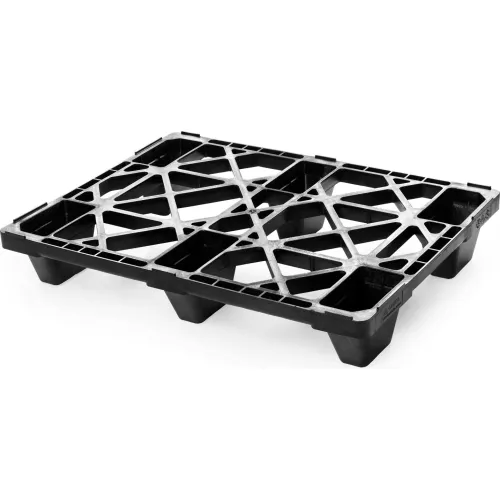
Description
Nestable plastic pallets are lightweight, durable alternatives to wooden pallets designed for storage, warehousing, and material handling operations. These 31-1/2″ x 23-2/3″ industrial pallets are engineered to support heavy loads while offering superior protection for products during storage and transport, making them essential for facilities requiring long-term reliability and regulatory compliance.
Key Features and Specifications
These nestable plastic pallets are manufactured from USDA-approved, 100% recyclable black polyethylene, ensuring food-safe compatibility and environmental sustainability for operations requiring FDA or agricultural compliance. The textured surface finish enhances load stability and grip, reducing product shift during handling and transport. With a robust 2,200-pound fork capacity and impressive 5,500-pound static floor weight capacity, these pallets accommodate demanding industrial applications while maintaining structural integrity over extended operational lifecycles. The 4-way forklift entry design enables seamless integration into existing warehouse management systems and automated material handling equipment, eliminating directional constraints. Standing 5 inches in height, these pallets optimize vertical storage density in standard 8-foot and 10-foot ceiling facilities. Additionally, these pallets are ISPM 51-exempt, streamlining international export logistics and eliminating costly fumigation treatments required for wooden pallet alternatives, making them ideal for global supply chain operations.
Applications and User Base
Nestable plastic pallets serve diverse industries including food and beverage production, pharmaceutical manufacturing, automotive parts distribution, retail supply chains, and chemical handling operations. Food processing facilities benefit from the hygienic properties and resistance to mildew and microbial growth, while pharmaceutical warehouses leverage USDA approval for cleanroom and GMP-compliant environments. Third-party logistics providers (3PLs), distribution centers, and contract manufacturers rely on these pallets for consistent load handling across multiple customer accounts without cross-contamination risk. Cold storage operations and freezer facilities utilize plastic pallets’ superior performance compared to wood, which absorbs moisture and degrades in temperature-cycling environments. Retailers managing reverse logistics and return merchandise authorization (RMA) programs favor nestable designs for space efficiency in receiving departments. Export-focused businesses reduce shipping costs by eliminating ISPM 51 phytosanitary certification requirements, while regional and international distributors appreciate the standardized dimensions for pallet racking systems and conveyor compatibility.
Selection Criteria for Plastic Pallet Purchases
When evaluating nestable plastic pallets for procurement, verify load capacity requirements by calculating both dynamic (fork lift impact) and static (stacked storage) weight scenarios specific to your product density and warehouse configuration. Assess nesting efficiency—these pallets collapse to minimal height when empty, directly impacting return logistics costs and storage footprint for rental or in-house fleet models. Confirm compatibility with your material handling equipment, including forklift types (counterbalance vs. reach trucks), pallet jacks, automated conveyor systems, and racking infrastructure. Consider chemical resistance if storing oils, solvents, or corrosive materials; polyethylene’s inherent resistance reduces degradation compared to wood or composite alternatives. Evaluate temperature tolerance for cold storage, freezer, or outdoor applications where UV exposure and thermal cycling occur. Review cleaning requirements and sanitization protocols—plastic pallets support high-pressure washing and chemical disinfection without splintering or harboring pathogens. Compare total cost of ownership including purchase price, maintenance, repair versus replacement thresholds, and end-of-life recycling value. Finally, verify certifications for your industry: USDA approval for food handling, FDA compliance for pharmaceutical applications, and ISPM 51-exemption status for international shipments.
What size and weight capacity should I choose for my warehouse?
Select pallet dimensions based on your racking system width and aisle configuration. These 31-1/2″ x 23-2/3″ dimensions fit standard 40″ x 48″ pallet rack openings while offering compact footprint benefits for narrow-aisle and drive-in racking systems. Confirm your fork truck specifications: the 2,200-pound fork capacity suits most standard counterbalance forklifts, while the 5,500-pound floor capacity supports heavy static loads in block stacking or pallet rack configurations. Calculate your typical load weight by multiplying case count, case weight, and pallet tare weight to ensure you remain below these thresholds with safety margin.
How do I implement a pallet pool system with nestable pallets?
Establish a closed-loop pallet management system by assigning unique identification via barcode or RFID tags to track inventory movement across facilities. Implement sortation protocols at receiving to separate damaged pallets for repair or recycling. Train material handling personnel on proper nesting procedures to maximize space efficiency during empty pallet return shipments. Partner with a pallet recovery service or establish internal logistics coordination to manage empty returns, reducing net cost per transaction. Monitor wear patterns and establish replacement thresholds to maintain load capacity specifications and prevent safety incidents from degraded pallets.
What is the difference between nestable and stackable plastic pallets?
Nestable pallets feature recessed bottoms




Reviews
There are no reviews yet.