Description
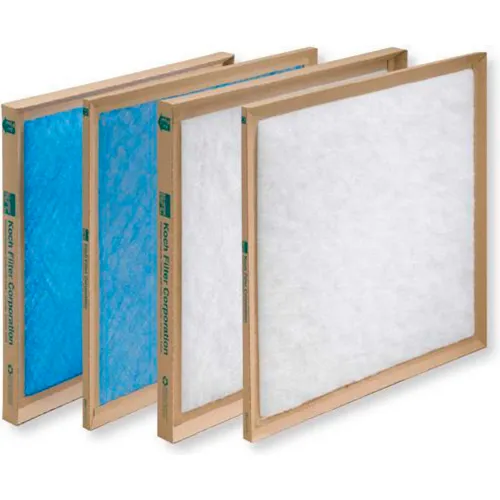
The KOCH Disposable Air Filter 20x25x1 FIBERGLASS MERV 5 is a heavy-duty, disposable air filtration unit designed for standard HVAC systems in commercial and industrial facilities. This economical filter is engineered to capture airborne particles and maintain adequate airflow while protecting your heating and cooling equipment from dust accumulation and contamination.
Key Features and Specifications
This disposable air filter features a 20x25x1 inch nominal dimension (actual dimensions 19.5″ x 24.5″ x 0.75″) that fits standard residential and light commercial HVAC applications. The filter utilizes fiberglass media construction, a proven pleated design that maximizes surface area for efficient particle capture without restricting airflow. With a MERV 5 rating, this filter captures particles as small as 10 microns, including pollen, dust, lint, and larger airborne contaminants, making it suitable for facilities where basic air quality maintenance is required. The heavy-duty frame provides structural integrity and prevents bypassing, ensuring all air passes through the filter media rather than around it. Disposable construction eliminates the need for cleaning or maintenance—simply replace when dirty. The fiberglass media is naturally antimicrobial and resists moisture buildup, making it ideal for varying humidity environments. This filter is compatible with standard furnaces, air handlers, and central air systems that accommodate 1-inch thick filters.
Common Users and Applications
MERV 5 fiberglass filters are widely used in small commercial facilities, warehouses, light manufacturing plants, schools, retail spaces, and office buildings where basic dust control and equipment protection are the primary concerns. Facility managers and maintenance teams rely on these filters to extend the service life of HVAC equipment by preventing dust accumulation on coils and blower components. Common applications include standard air handling units, split-system air conditioners, packaged rooftop units, and forced-air furnaces. Industries with moderate dust loads—such as retail, food service, administrative offices, and light assembly—benefit from MERV 5 filtration without the airflow restrictions associated with higher MERV ratings. These filters are also frequently used as pre-filters in multi-stage filtration systems to extend the life of higher-efficiency secondary filters. Cost-conscious facility operators choose disposable fiberglass media filters for budget-friendly air quality maintenance when premium particle capture isn’t critical.
What to Consider When Purchasing Air Filters
When selecting a disposable air filter, verify your system’s exact filter pocket depth and dimensions—this 1-inch thick filter requires a standard 1-inch slot, not a 2-inch or 4-inch pocket. Confirm your facility’s air quality requirements and equipment manufacturer specifications; MERV 5 is appropriate for basic filtration but may not meet requirements in healthcare, pharmaceutical, or sensitive clean-room environments. Consider your HVAC system’s airflow capacity: higher MERV ratings restrict airflow more than lower ratings, and using an oversized MERV rating in a standard residential unit can reduce efficiency. Evaluate replacement frequency based on your facility’s dust load and environmental conditions—high-dust environments require more frequent filter changes (30–60 days), while cleaner facilities may extend intervals to 90 days. Compare total cost of ownership, including filter cost and labor for replacements; disposable filters eliminate cleaning labor but require regular purchasing. Check whether your facility prefers fiberglass, synthetic, or pleated media based on dust type and humidity exposure. Ensure inventory stock of correct dimensions to avoid system downtime during filter changes.
What size filter do I need for my HVAC system?
The filter size is determined by your air handling unit or furnace specifications. This 20x25x1 filter is designed for standard systems with a 20-inch by 25-inch filter slot that is 1-inch deep. Check your system’s existing filter frame, your equipment manual, or contact your HVAC contractor to confirm dimensions. Never force an incorrect size filter into your system, as it creates air leaks and reduces filtration effectiveness.
How often should I replace this disposable air filter?
Replacement frequency depends on facility conditions, occupancy, and dust load. Most commercial facilities change MERV 5 fiberglass filters every 60–90 days, though high-traffic areas, dusty environments, or facilities with pets may require monthly replacement. Check the filter visually every 30 days; if it appears gray or clogged, replace it immediately. Restricted filters increase system strain, reduce cooling/heating efficiency, and elevate energy costs. Establish a regular replacement schedule based on your facility’s specific air quality needs.
What is the difference between MERV 5 and MERV 8 or MERV 13 filters?
MERV (Minimum Efficiency Reporting Value) ratings measure a filter’s ability to capture particles. MERV




Reviews
There are no reviews yet.