
Description
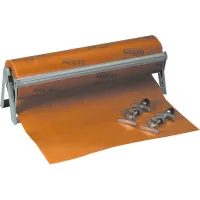
Indented Kraft Paper is a heavyweight protective wrapping material engineered for demanding shipping, cushioning, and packing applications. This 60 lb. roll delivers superior strength and crease retention, making it an essential supply for manufacturers, distributors, warehouses, and logistics operations that require reliable, cost-effective void fill and product protection.
Key specifications and features make this indented kraft paper a versatile choice for industrial packing operations. The 60 lb. basis weight provides substantial cushioning and tear resistance while remaining lightweight enough for economical shipping. Measuring 48 inches in width and 300 feet in length per roll, this size accommodates large-scale packaging lines and manual wrapping operations with minimal waste. The indented surface—featuring closely spaced ridges and valleys—creates air pockets that improve cushioning performance and allow the paper to conform to irregular product shapes. The material is unbleached kraft, offering natural strength from virgin wood fiber construction, while remaining recyclable and environmentally compatible with standard waste streams. The roll format enables continuous dispensing through stationary or portable dispensers, reducing labor time compared to sheet stock. This paper resists puncture and abrasion during handling, protecting fragile contents from impact damage during transit and storage.
Common users of indented kraft paper include e-commerce fulfillment centers, automotive parts suppliers, electronics manufacturers, glass and ceramics distributors, food and beverage producers, and third-party logistics (3PL) providers. Applications span wrapping individual products, inter-layer separation in boxes, void fill cushioning, edge protection, and bundle wrapping. Manufacturing facilities use this paper to protect finished goods during internal transport and temporary storage. Medical device companies value the material’s ability to provide cushioning without introducing contaminants. Appliance manufacturers employ indented kraft as a lightweight alternative to foam sheets when wrapping components and assemblies. Distribution centers processing mixed SKUs appreciate the versatility—a single roll type works across multiple product categories, simplifying inventory management and training requirements.
When selecting indented kraft paper for your operation, several factors warrant careful consideration. Evaluate the basis weight (60 lb. is standard for general-purpose cushioning; lighter weights suit delicate items while heavier weights accommodate harder products). Consider the roll width in relation to your dispensing equipment and typical package dimensions—48 inches fits standard pallet widths and most shipping box sizes. Assess the roll length (300 feet is substantial but confirm your usage rate to avoid storage issues or excessive stock rotation). Verify that the indentation pattern provides adequate cushioning depth for your products’ fragility level. Confirm the paper’s compatibility with automated packing line speeds if you plan machine dispensing. Review sustainability credentials if your supply chain emphasizes recycled content or carbon footprint reduction. Calculate total cost of ownership by comparing price per linear foot, accounting for waste and overlap in application. Verify the supplier’s minimum order quantities and lead times to ensure consistent availability during peak shipping seasons. Test compatibility with your current wrapping or dispensing equipment before committing to large orders.
What size roll should I order for my packing operation?
The 48″ x 300′ roll is ideal for high-volume operations and is one of the most common industrial sizes. A 300-foot roll yields approximately 1,200 linear feet when accounting for typical application overlap. Most businesses consuming 5–10 rolls monthly benefit from this size, as it balances on-hand inventory against rotation. If your usage exceeds 20 rolls monthly, consider bulk purchasing or establishing a recurring delivery schedule to reduce per-unit costs and ensure continuous supply.
How do I dispense indented kraft paper efficiently in a manual packing station?
Mount the roll horizontally on a stationary dispenser frame at elbow height to minimize worker fatigue and maintain consistent wrap tension. Position the dispenser near your primary packing station to reduce travel time. Train staff to pull paper at a moderate, steady rate rather than jerking, which prevents tearing and reduces material waste. For high-throughput environments, consider a motorized dispenser with adjustable speed control, which increases consistency and worker productivity while reducing repetitive strain injuries.
What is the difference between indented kraft paper and corrugated kraft paper for cushioning?
Indented kraft paper features a surface with shallow ridges that trap air and provide light-to-moderate cushioning; it excels at conforming to product shapes and saving space. Corrugated kraft paper contains a fluted core layer between two kraft facings, delivering superior rigidity and cushioning for heavier or harder items. Indented kraft is typically more economical and works best for lightweight to medium-weight products, while corrugated kraft suits fragile glassware, electronics, and heavier industrial goods. Both are recyclable, but indented kraft integrates more easily into existing packing workflows due to its flexibility and lighter weight.
Order this industrial-grade indented kraft paper roll today and enjoy fast shipping with reliable stock availability from our nationwide distribution network.
“`




Reviews
There are no reviews yet.