Description
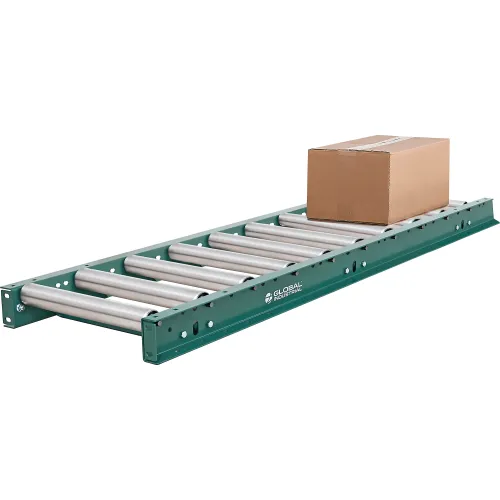
The GRAVITY ROLLER CONVEYOR 5FT 21″ 6″ AXLE is a straight-section powered conveyor system designed for material handling in warehouse, manufacturing, and distribution environments. This 5-foot gravity roller conveyor provides efficient, cost-effective product movement without requiring electricity, making it ideal for light to medium-duty applications across production lines and fulfillment centers.
Key Features and Specifications
This gravity roller conveyor system delivers robust performance with a 400 lbs/ft load capacity, capable of handling pallets, cases, boxes, and packages with consistent throughput. The 5-foot length provides adequate run distance for sorting, assembly, and transfer operations, while the 21-inch frame width accommodates standard carton dimensions and pallet widths commonly found in distribution environments. The 6-inch roller axle center spacing ensures optimal weight distribution and prevents product sagging during transit. Constructed with heavy-duty steel rollers mounted on sealed ball bearings, this conveyor system offers exceptional durability with minimal maintenance requirements. The non-powered gravity design eliminates ongoing electricity costs and provides silent operation, making it suitable for facilities with noise restrictions. The straight section configuration integrates seamlessly into existing conveyor systems and can be combined with curved sections, inclines, and decline units to create customized material handling layouts. All components feature corrosion-resistant construction and industrial-grade welding for extended service life in demanding warehouse and manufacturing settings.
Applications and User Base
Manufacturing facilities, distribution centers, and fulfillment operations rely on gravity roller conveyor systems to move products between workstations, packing areas, and shipping departments. Food and beverage processors utilize this equipment for line-side storage and order assembly, while e-commerce fulfillment centers depend on gravity conveyors for efficient case and pallet movement. Pharmaceutical and medical device manufacturers employ these systems to maintain sanitary, quiet production environments. Retail distribution networks use gravity roller conveyors for high-volume order processing, returns handling, and cross-docking operations. Light manufacturing environments, automotive parts suppliers, and general industrial facilities benefit from the flexibility and reliability of gravity-driven systems. Because no powered rollers are required, this product serves as an economical alternative to motorized conveyor systems in applications where product velocity can be controlled through manual intervention or system design.
Selecting the Right Gravity Roller Conveyor
When evaluating gravity roller conveyor systems, first determine your maximum load weight per foot and compare against the 400 lbs/ft capacity rating to ensure adequate safety margins. Measure your product width and verify that the 21-inch frame width provides clearance for your largest items; undersized conveyor widths increase spillage risk and reduce throughput. Assess the roller diameter and axle spacing to confirm compatibility with your product dimensions—items smaller than the roller spacing may fall through gaps. Consider whether you need a straight section alone or plan to integrate curves, inclines, or decline sections for future expansion, as this affects purchasing decisions and layout planning. Evaluate floor space requirements and verify structural capacity, as fully loaded conveyors generate significant weight. Examine mounting options and integration points to ensure compatibility with your existing material handling infrastructure. Review operational requirements around product velocity, spacing intervals, and manual control points. Verify whether the system requires guards, side rails, or end stops based on your facility’s safety standards and OSHA compliance requirements.
What is the maximum weight capacity per foot on this conveyor system?
This gravity roller conveyor is rated for 400 lbs/ft load capacity, meaning each linear foot of conveyor can safely support up to 400 pounds distributed across the roller surface. For a 5-foot section, the total safe load capacity is approximately 2,000 pounds, though actual working loads should remain below this maximum to accommodate dynamic stresses and ensure long-term durability. Always account for product acceleration and deceleration forces when calculating operational loads.
How do I integrate this 5-foot section into a longer conveyor line?
Gravity roller conveyor sections connect using bolted frame-to-frame connections at the ends of each unit. Position sections end-to-end on a level, structurally sound floor, then align the frames and tighten connecting bolts to create a unified system. For inclines or declines, install the appropriate angled support structure. You can add powered roller sections, curved sections, or transfer units as needed to create complex layouts. Ensure all sections maintain proper slope alignment (typically 1-2 degrees for gravity flow) to maintain consistent product movement without excessive acceleration.
What is the difference between gravity roller conveyors and powered roller conveyors?
Gravity roller conveyors rely on product weight and floor slope to move items, requiring no electricity and generating no noise, making them ideal for manual-speed operations


Reviews
There are no reviews yet.