
Description
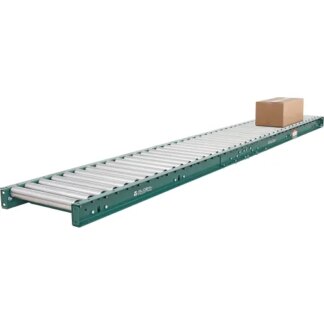
The Gravity Roller Conveyor 10FT 21″ 3″ Axle is a straight-section powered-free conveyor system designed to move packages, boxes, and materials efficiently along distribution lines without external power sources. This industrial-grade roller conveyor is ideal for warehouse operations, manufacturing facilities, and fulfillment centers that require reliable gravity-fed material handling and product sorting.
This 10-foot gravity conveyor section features a robust steel frame construction with a 21-inch interior width between frames and 3-inch axle center spacing, delivering a substantial 120 lbs/ft load capacity across the entire length. The roller assembly uses precision-engineered cylindrical rollers mounted on fixed axles, eliminating the need for motorized drives while maintaining consistent product flow. The straight-section design integrates seamlessly into existing conveyor systems, with standard bolt-hole configurations for coupling to adjacent sections. The durable powder-coat finish protects against warehouse dust, moisture, and minor impacts common in industrial environments. Heavy-duty bearing assemblies ensure smooth, low-friction rotation, reducing manual push effort and extending operational lifespan. This conveyor section is engineered for 24/7 continuous operation and accommodates both lightweight parcel handling and heavier carton applications within its rated capacity.
Gravity roller conveyors are used across diverse industries including e-commerce fulfillment, food and beverage distribution, automotive parts warehousing, postal and parcel services, retail distribution centers, and light manufacturing assembly lines. Operations managers rely on gravity conveyor systems to create efficient material flow paths from receiving docks through sorting stations, packing areas, and shipping zones. The 10-foot length makes this section ideal for spanning between workstations, bridging dock heights, or creating compact sorting loops. Warehouse operators appreciate gravity conveyors because they eliminate electricity consumption, reduce maintenance overhead, and allow workers to manually control product velocity by adjusting angle or applying brake systems. This makes gravity rollers particularly valuable in facilities with multiple product sizes or sorting requirements where variable speed control is necessary.
When evaluating gravity roller conveyor sections for your facility, prioritize matching the load capacity to your heaviest products plus safety margin—the 120 lbs/ft rating on this model ensures reliable performance for most industrial applications. Verify that the 21-inch frame width accommodates your package dimensions with adequate clearance on both sides for safe passage and operator access. Consider the axle center spacing; the 3-inch spacing on this unit provides optimal support for standard carton heights while maintaining smooth rolling characteristics. Examine existing conveyor infrastructure to confirm bolt-hole patterns and coupling compatibility before purchasing multiple sections. Assess whether your facility requires straight sections, curved transitions, or incline/decline angles; most gravity systems combine multiple section types into comprehensive material handling solutions. Review installation height requirements and worker ergonomics—gravity conveyors perform best when installed at heights between 36-48 inches to minimize manual handling strain. Confirm that your facility’s climate and humidity levels are compatible with standard bearing lubrication; some warehouses require enhanced corrosion-resistant coatings for outdoor or food-processing environments.
What size cartons and packages work best with this 21-inch gravity conveyor?
The 21-inch interior width accommodates standard carton dimensions from approximately 12 inches to 20 inches in width. Packages narrower than 12 inches may require additional support or side-guard rails to prevent tipping. For optimal performance and safety, packages should be rigid boxes rather than soft bags, and load weights should be distributed evenly across the roller surface. The 3-inch axle spacing ensures that most standard parcel heights rest securely on multiple rollers simultaneously, preventing sagging or jamming. E-commerce operations typically process boxes ranging from 6x4x4 inches up to 18x18x12 inches on this conveyor width without modification.
How do I control the speed of products moving across this gravity roller conveyor?
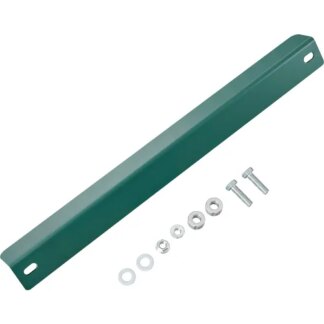
Gravity conveyor speed is naturally controlled by product weight, roller friction, and installation angle. To slow product movement, increase the conveyor section’s horizontal angle or angle it slightly downward—even 1-2 degree adjustments significantly reduce velocity. Install brake rollers (optional add-on components) at strategic locations to create controlled stops or reduce momentum. Some facilities apply light friction materials or braking bars along the conveyor surface. For maximum control over individual packages, operators can manually manage product spacing and apply hand brakes during sorting operations. The smooth-running roller design minimizes friction, so products naturally move steadily once released—this allows workers to batch products and release them in controlled intervals.
What is the difference between gravity roller conveyors and powered belt conveyors for warehouse applications?
Gravity roller conveyors operate without electricity, requiring manual initiation or slight angle positioning to move products, making them ideal for variable-speed operations, sorting, and cost-conscious facilities. Powered belt conveyors use motors to move materials at consistent speeds and handle continuous high-volume throughput more efficiently. Gravity systems cost significantly less upfront and reduce operational electricity expenses, while powered systems excel in high-speed, long-distance applications. For facilities requiring flexible sorting, multiple stop points, or product inspection stations, gravity rollers offer superior control



Reviews
There are no reviews yet.