Description
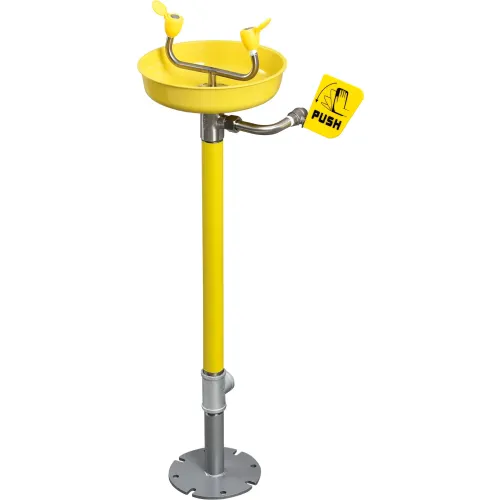
The EYEWASH STATION PEDESTAL FLOOR is an emergency eyewash device mounted on a freestanding pedestal base, designed for rapid eye irrigation in industrial and commercial facilities. This unit provides immediate decontamination for chemical splashes, dust, and particulate matter exposure, making it an essential component of workplace safety protocols and OSHA compliance programs.
Key Features and Specifications
This pedestal-mounted eyewash station features a push-handle activation system that delivers immediate, hands-free operation when an eye exposure incident occurs. The unit is ANSI Z358.1-2014 compliant, meeting the stringent American National Standards Institute standards for emergency eyewash and shower equipment. The freestanding pedestal design allows for flexible placement throughout facilities without requiring wall anchoring or plumbing modifications, making it ideal for warehouses, manufacturing plants, and chemical storage areas. The station delivers a continuous, gentle stream of tepid water at the proper flow rate and temperature to safely flush contaminants from the eye area. Constructed from corrosion-resistant materials, this eyewash station withstands harsh industrial environments and chemical-laden atmospheres. The ergonomic design positions the eyewash nozzles at appropriate height for user comfort during emergency use, and the durable stainless steel or powder-coated finish resists rust and degradation. Weekly activation and monthly inspections are simplified by the straightforward mechanical design, ensuring your facility maintains full operational readiness.
Common Users and Applications
Manufacturing facilities, chemical plants, pharmaceutical companies, laboratories, metal fabrication shops, automotive service centers, and agricultural operations rely on pedestal eyewash stations as critical safety infrastructure. Environments handling corrosive liquids, solvents, heavy metals, or airborne particulates require accessible eyewash stations positioned throughout work areas. Construction sites, refineries, food processing facilities, and waste management operations also mandate emergency eyewash capability to protect worker health and meet regulatory requirements. Educational institutions with science labs, dental practices, and medical facilities utilize these units as standard emergency response equipment. The pedestal floor mount configuration is particularly valuable in facilities where wall-mounted options are impractical, where equipment relocation is frequent, or where multiple eyewash stations are needed to ensure no worker is more than 10 seconds’ walk from emergency decontamination.
What to Consider When Selecting an Eyewash Station
Begin by assessing your facility’s hazard profile—the specific chemicals and contaminants your workers encounter dictate the eyewash station specifications you require. Verify that any unit you purchase carries ANSI Z358.1 certification, as this ensures compliance with emergency equipment standards and workplace safety regulations. Consider the placement strategy for your facility; pedestal units work well in centralized locations or high-traffic areas where wall mounting isn’t feasible. Evaluate water supply logistics—pedestal stations require connection to potable water sources, so confirm your facility’s plumbing infrastructure can support the unit’s placement. Flow rate and delivery time are critical; proper eyewash stations must deliver at least 1.5 gallons per minute for a minimum of 15 minutes of continuous operation. Temperature regulation is important; water delivery should remain between 60–100°F to ensure user comfort and encourage flushing for the full recommended duration. Check the activation mechanism—push-handle systems must operate reliably even in emergency situations when panic or contamination might impede fine motor control. Maintenance accessibility is essential; ensure the station design allows simple access for weekly testing, monthly inspections, and any necessary cleaning or component replacement. Factor in local code requirements, as some jurisdictions mandate specific eyewash station models, spacing between units, or signage specifications. Budget for both the initial equipment cost and ongoing maintenance expenses, including water system testing and periodic component replacement.
What size water supply do I need for a pedestal eyewash station?
A standard eyewash station requires continuous delivery of at least 1.5 gallons per minute for the full 15-minute flushing duration, which totals 22.5 gallons of potable water. Your facility’s water line must have adequate pressure (typically 20–60 PSI) and should include a backflow prevention valve and drainpipe system to handle continuous water discharge. If your water supply is limited or pressure-regulated, consult your plumbing contractor before installation to ensure the pedestal station can receive uninterrupted flow during an emergency.
How do I properly maintain and inspect a pedestal eyewash station?
ANSI Z358.1 standards require weekly activation testing to verify proper function, flow rate, and temperature consistency. Monthly formal inspections should document water delivery, check for mineral buildup or corrosion, verify activation mechanism responsiveness, and ensure drainage operates correctly. Annual professional servicing may be necessary depending on water quality and usage; hard water areas should implement water softening or replacement cartridges to prevent nozzle blockages. Keep maintenance records and replacement part inventories on hand for quick repairs.



Reviews
There are no reviews yet.