Description
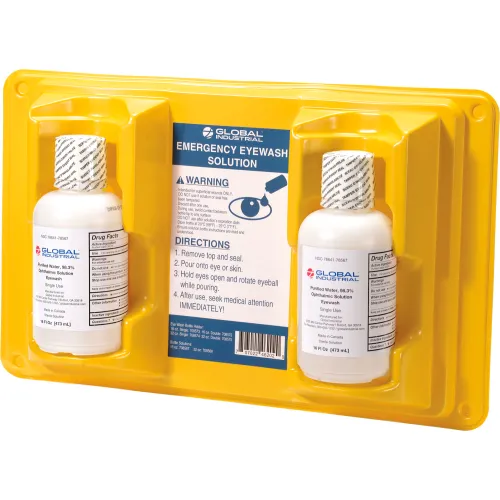
The EYEWASH BOTTLE STATION DOUBLE 16 OZ is a wall-mounted dual-bottle eyewash emergency station designed to provide rapid eye irrigation in workplace environments where chemical splashes, dust, or foreign particles pose a risk to worker safety. This ANSI-compliant eyewash solution delivers immediate first-aid relief and helps facilities meet federal safety regulations including OSHA standards and ANSI Z535.1 guidelines.
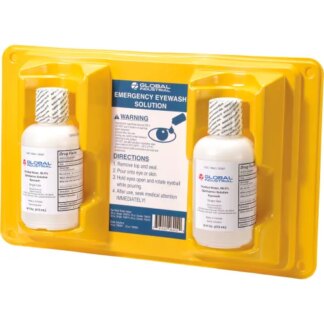
Key Features & Specifications: This dual-bottle eyewash station contains two 16 oz bottles of sterile saline solution, providing 32 ounces of total emergency eyewash capacity. The wall-mountable design allows for permanent installation in high-risk areas such as manufacturing plants, chemical storage facilities, laboratories, and warehouses, ensuring the station is always accessible when seconds count. Each 16 oz bottle delivers a consistent stream of isotonic saline solution specifically formulated for ocular irrigation, minimizing irritation while effectively flushing contaminants. The compact footprint (approximately 7″ W x 5″ D x 9″ H) makes it easy to install near workstations without consuming valuable space. The double-bottle configuration ensures backup capacity—when one bottle depletes, workers have immediate access to a second bottle to continue treatment. Clear labeling and bright visibility make the station easy to locate during emergencies, and the durable plastic construction resists corrosion from chemical-rich environments. The pull-tab or flip-top activation mechanism allows single-handed operation, critical when workers are experiencing eye discomfort and need immediate relief.
Common Users & Applications: Manufacturing facilities, chemical plants, and industrial operations utilize eyewash stations as mandatory emergency equipment for worker protection. Laboratories, pharmaceutical companies, and research facilities rely on these stations for daily operations involving volatile compounds and caustic materials. Construction sites, automotive shops, and maintenance departments keep eyewash stations on hand for unexpected chemical exposures. Hospitals, dental offices, and medical facilities maintain eyewash equipment for occupational safety compliance. Educational institutions including vocational schools, colleges, and technical training centers require eyewash stations in science labs and technical workshops. Facilities managers, OSHA compliance officers, and safety directors prioritize eyewash stations as non-negotiable components of comprehensive workplace safety programs. The dual-bottle configuration is especially valuable in high-traffic areas or locations where multiple workers may need simultaneous access to eye irrigation.
What to Consider When Selecting an Eyewash Station: Capacity matters significantly—16 oz bottles provide sufficient volume for initial flushing according to ANSI standards, though facilities with multiple hazardous zones may require multiple stations. Solution quality is paramount; verify that saline solution is sterile, isotonic, and specifically formulated for ophthalmic use rather than general-purpose rinse solutions. Check the expiration dates on replacement bottles and establish a replacement schedule to ensure solution efficacy. Consider installation location carefully—eyewash stations should be within 10 seconds of any potential hazard area and clearly marked with reflective signage. Wall-mounted models versus pedestal stations depend on your facility layout; wall-mounted versions work well in confined spaces and near specific workstations. Verify that your chosen station meets ANSI Z535.1 standards and complies with OSHA requirements for your industry. Maintenance accessibility is critical—ensure replacement bottles are readily available and staff members understand proper usage and care procedures. Some facilities prefer dual-bottle systems specifically because they provide backup capacity and reduce downtime between bottle replacements.
What size eyewash bottles do I need for my facility?
The 16 oz bottle size is standard for most industrial workplaces and meets ANSI recommendations for initial emergency eye irrigation. Two 16 oz bottles (32 oz total) provide adequate volume for flushing both eyes thoroughly according to safety protocols. However, for high-hazard facilities with frequent chemical handling, consider installing multiple stations or choosing larger capacity models. The dual-bottle configuration ensures that if one bottle is partially used, workers have immediate access to a full second bottle.
How do I install and maintain the EYEWASH BOTTLE STATION DOUBLE 16 OZ?
Installation requires mounting the station on a clean, accessible wall surface near potential hazard areas using the provided hardware. Mount the station at approximately eye level (48-52 inches from floor) so workers can easily activate it during emergencies. Replace bottles immediately after use or when expired—check expiration dates monthly as part of your facility safety audit. Verify bottles are secure and properly seated to prevent leakage. Train all employees on location and proper use, and conduct quarterly inspections to ensure the station remains functional and visible.
What is the difference between an eyewash station and a full emergency shower station?
Eyewash stations target ocular exposure specifically, delivering focused saline irrigation to the eyes and surrounding tissue. Full emergency shower stations provide whole-body decontamination for extensive chemical exposure, dermal contact, or contamination. Most facilities require both—eyewash stations for localized eye hazards and emergency showers for larger-



Reviews
There are no reviews yet.