
Description
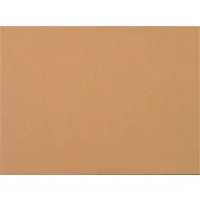
Corrugated layer pads are protective cushioning sheets designed to separate and stabilize stacked products during storage and transit. These kraft corrugated separators prevent product shifting, crushing, and surface damage while maximizing carton space and improving warehouse organization.
These 11-7/8″L x 8-7/8″W kraft corrugated pads deliver reliable performance across demanding supply chain applications. Each pad features single-wall corrugated construction with a natural kraft paper finish, providing structural integrity without excessive weight. The standard die-cut dimensions offer compatibility with common case sizes and pallet configurations, while the 100-count package ensures adequate inventory for mid-to-large volume operations. The corrugated medium provides superior puncture resistance and cushioning compared to flat paperboard, effectively distributing load pressure across stacked layers. Kraft material resists moisture better than bleached alternatives and offers excellent printability for custom marking or branding when needed. These pads meet standard corrugated medium specifications for durability and come ready to use without assembly or preparation.
Manufacturers, distributors, and logistics companies rely on corrugated layer pads across diverse industries including food and beverage, pharmaceuticals, electronics, automotive parts, and general merchandise. Food processors use these separators to stabilize bakery products, frozen goods, and perishables while maintaining sanitary conditions. E-commerce fulfillment centers deploy layer pads to protect fragile items, prevent crushing during multi-tier stacking, and reduce damage claims. Automotive suppliers use them to organize metal components, fasteners, and precision parts. Appliance manufacturers incorporate them between units to prevent surface scratches and dings during containerized shipment. Industrial equipment distributors rely on these pads to organize heavy components in mixed-load pallets. Warehouse managers appreciate the space-saving efficiency when consolidating shipments with varying product heights and weights.
When selecting corrugated layer pads, evaluate material composition based on your cargo type—kraft suits general industrial use, while bleached corrugated works better for food contact applications. Verify dimensions match your carton footprint and pallet pattern to ensure complete coverage and prevent product movement. Assess corrugation type (A-flute, B-flute, C-flute) according to required cushioning and compression strength; B-flute and C-flute provide better stacking support for heavier loads. Consider quantity requirements by calculating layers per pallet and monthly throughput—bulk purchasing of 100-count packages reduces per-unit cost. Examine moisture resistance if operating in humid or refrigerated environments. Review compression strength ratings measured in PSI to ensure pads support vertical stacking without collapse. Confirm FDA compliance status for food industry applications. Compare edge crush value (ECB) specifications to guarantee sufficient durability against rough handling and high-velocity conveyor systems.
What size replacement pads do I need for my shipping boxes?
Measure your carton’s interior length and width, then select corrugated pads that match or slightly exceed those dimensions. This 11-7/8″L x 8-7/8″W size works perfectly for standard corrugated shipping cartons in the 12″x9″ external range. Slightly oversized pads (extending 1/16″ to 1/8″ beyond carton perimeter) prevent product from settling into corners. Undersized pads create gaps that allow items to shift during transit, resulting in damage and customer returns. Always verify your actual carton dimensions before ordering, as customization options exist for non-standard sizes through industrial suppliers.
How do I determine the correct corrugation strength for my application?
Corrugation flute selection depends on stacking height and product weight. B-flute and C-flute corrugated pads offer superior compression resistance and stacking strength compared to A-flute, making them ideal for multi-tier loads exceeding 50 pounds per layer. Consult your supplier’s ECB (edge crush value) specifications—higher ECB ratings indicate greater load-bearing capacity. Test sample pads under your actual shipping conditions to verify performance before committing to bulk orders. Environmental factors like temperature, humidity, and storage duration also affect pad longevity.
What is the difference between kraft and bleached corrugated layer pads?
Kraft corrugated pads feature natural brown fiber offering excellent strength-to-weight ratio and cost efficiency for general industrial shipping. They perform exceptionally well in dry storage conditions and provide adequate moisture resistance for standard warehouse environments. Bleached corrugated pads undergo additional processing to achieve white appearance, offering superior food-contact compliance and enhanced moisture barriers suitable for refrigerated or frozen applications. Bleached options cost 15-25% more but provide cleaner aesthetics for consumer-facing packaging. Select kraft for standard B2



Reviews
There are no reviews yet.