
Description
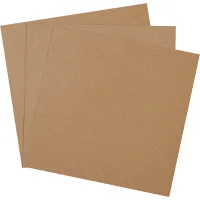
Chipboard Pads are rigid, flat protective sheets made from compressed recycled kraft paper, designed to reinforce and protect products during shipping and storage. These 7″L x 5″W pads are essential protective packaging materials for businesses that need to safeguard fragile items, reinforce corrugated boxes, or create stiffeners for flat shipments.
Each pad in this 1125-pack features a natural kraft composition that provides structural integrity without adding excessive weight to shipments. The 7″ by 5″ dimensions offer versatile coverage for small to medium-sized packages, making them ideal for protecting documents, photos, artwork, vinyl records, textiles, and delicate merchandise. The chipboard material is sturdy enough to prevent bending and crushing while remaining cost-effective for high-volume shipping operations. With 1125 sheets per pack, businesses can maintain consistent inventory for ongoing packing operations without frequent reordering. The kraft construction is recyclable and eco-friendly, appealing to companies committed to sustainable packaging practices. These pads lie flat for easy handling and stack efficiently for convenient storage in warehouse environments.
Industries relying on chipboard pads include e-commerce fulfillment centers, print shops, photography studios, music retailers, apparel distributors, and logistics providers. Common applications include using pads as dividers between stacked items, reinforcement layers in corrugated boxes, backing boards for photographs and artwork, stiffeners in envelope mailers, and protective barriers against moisture and crushing forces. Subscription box services, bookstores, and craft suppliers frequently incorporate chipboard pads into their standard packaging protocols. Mail-order businesses and omnichannel retailers depend on these pads to reduce damage claims and customer returns caused by in-transit product deterioration. Whether protecting high-value items or economically reinforcing bulk shipments, chipboard pads serve as an economical damage prevention solution across diverse industries.
When selecting chipboard pads for your operation, evaluate several critical factors: thickness and durability (measured in points or caliper), dimensional accuracy for your specific box sizes, weight per pad, quantity requirements based on monthly shipping volume, and price per unit at bulk scales. Consider whether you need virgin kraft or recycled content based on your sustainability standards and product contact requirements. Assess storage space and shelf-life stability—chipboard pads should be kept dry and protected from humidity to maintain structural properties. Review whether your supplier offers consistent quality control and product uniformity, as this affects packing efficiency and brand presentation. Compare total landed cost including shipping fees, as bulk pack sizes significantly impact per-unit pricing. Verify that pads meet any industry-specific requirements, such as FDA compliance for food contact or specific basis weight standards for your application.
What size products work best with 7″ x 5″ chipboard pads?
These 7″ by 5″ pads are optimally sized for protecting items measuring up to 6″ x 4″ (accounting for overlap), making them perfect for vinyl records (standard 12.5″ records with 5″ width), photograph prints (8×10 and smaller), greeting cards, art prints, small books, folded clothing items, and document stacks. They work particularly well in Priority Mail and standard shipping boxes where products need reinforcement without excessive dimensional weight increases.
How do I calculate how many chipboard pads I need per month?
Multiply your average daily shipments by the number of pads required per package (typically 2-4 depending on product fragility and box design), then multiply by 22 business days. For example: 100 daily shipments × 2 pads per shipment × 22 days = 4,400 pads monthly. The 1125-pack size means you’d need approximately 4 packs monthly for this volume. Building in 15-20% surplus inventory prevents stockouts during peak shipping seasons.
What is the difference between chipboard pads and corrugated cardboard inserts?
Chipboard pads are solid, compressed kraft sheets offering uniform stiffness and flat protection with minimal thickness, making them ideal for preventing bending and crushing in relatively flat packages. Corrugated inserts feature fluted layers creating air channels, providing superior cushioning and shock absorption but greater bulk and weight. Choose chipboard pads when you need flat reinforcement and compact shipping; select corrugated alternatives when maximum impact protection and cushioning are priorities for fragile, delicate items.
Our Chipboard Pads ship quickly from warehouse stock with expedited delivery options available for qualifying orders.
“`


Reviews
There are no reviews yet.