Description
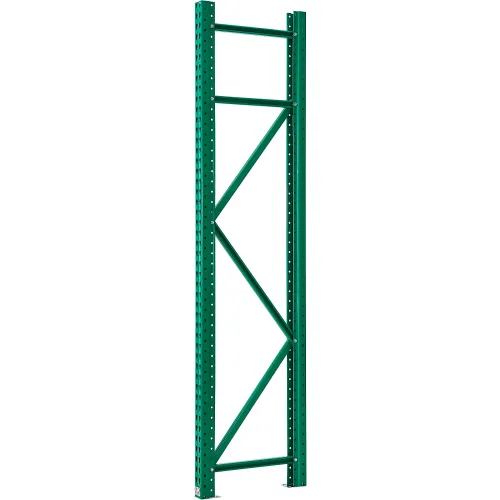
The Bolted Pallet Rack Upright Frame 96×42 is a heavy-duty vertical structural component designed to form the backbone of industrial racking systems in warehouses, distribution centers, and manufacturing facilities. This frame establishes the framework for multi-level storage configurations that maximize vertical space while maintaining exceptional load-bearing capacity.
Built from high-grade steel with a durable powder-coated finish, this upright frame measures 96 inches in height and 42 inches in depth, offering a robust foundation for demanding storage applications. The frame features a substantial 3″ x 3″ column size that provides structural rigidity and stability across heavy loads. With a 33,000 lb capacity rating based on 36-inch beam shelf spacing, this frame accommodates substantial weight distribution across multiple storage levels. The patent-pending design incorporates pre-attached braces that dramatically reduce assembly time on the warehouse floor, allowing teams to deploy racking systems faster without sacrificing integrity. This frame is engineered for bolted assembly, which provides superior stability and adjustability compared to other connection methods, enabling precise alignment and future reconfiguration as storage needs evolve.
Distribution centers, third-party logistics providers, manufacturing plants, and retail warehouses rely on pallet rack upright frames like this model to organize inventory, improve picking efficiency, and optimize storage density. Common applications include case pick operations, pallet storage, bulk goods warehousing, and cross-dock facilities. This frame size is particularly suited for mid-to-high-volume operations that require reliable, scalable storage infrastructure. Whether you’re storing palletized goods, small parts, or heavy machinery components, this upright frame serves as a critical component in your material handling system. The 96-inch height is ideal for facilities with adequate ceiling clearance and supports standard forklifts and order picking equipment.
When selecting a pallet rack upright frame, consider several critical factors to ensure your system meets operational requirements. First, verify load capacity ratings by calculating your actual per-level weight distribution, accounting for safety factors and uneven load placement. Second, measure your facility’s ceiling height and aisle width to confirm the frame dimensions align with your layout—this 96×42 model requires adequate headroom and working space. Third, evaluate the beam spacing compatibility—this frame’s 33,000 lb rating assumes 36-inch spacing, so adjusting beam intervals will affect capacity. Fourth, assess assembly requirements and labor availability; the pre-attached braces on this frame reduce complexity but verify your team has appropriate bolting equipment and torque specifications. Fifth, inspect coating quality to ensure protection against your facility’s environment, particularly if you operate in humid, corrosive, or temperature-extreme settings. Finally, confirm compliance with relevant industry standards such as RMI (Rack Manufacturers Institute) guidelines and ensure your system design aligns with OSHA regulations for warehouse safety.
What size beam do I need to pair with this upright frame?
This upright frame is designed to work with standard pallet rack beams in various lengths, typically ranging from 8 to 12 feet. The frame’s 42-inch depth accommodates standard pallet dimensions (48″ x 40″). The 33,000 lb capacity rating applies when using 36-inch beam shelf spacing. If you select tighter spacing (shorter beams), weight capacity increases; wider spacing reduces capacity. Consult detailed load tables or our technical team to match beams to your specific weight requirements. All beams must connect securely to the frame using appropriate bolted connections.
How do I assemble this pallet rack upright frame on-site?
The bolted assembly process involves positioning the upright frame vertically, securing it to adjacent frames using bolts through the pre-drilled connection points, and tightening all fasteners to manufacturer specifications. The pre-attached braces arrive ready-installed, eliminating the need for field welding or complex brace attachment. You’ll need standard wrenches, bolts (verify size/grade specifications), and a torque wrench to achieve proper fastener tension. Recommended practice is to bolt frames in progression, securing multiple levels before moving to the next section. Always ensure the frame is plumb (perfectly vertical) using a level before fully tightening fasteners. For large installations, many facilities rent or purchase bolting tools to accelerate deployment.
What is the difference between bolted and welded pallet rack systems?
Bolted systems, like this frame, offer flexibility for reconfiguration, easier repairs, and faster initial assembly with standard tools. Welded systems provide permanent connections with potentially cleaner aesthetics but cannot be easily disassembled or relocated. Bolted frames are preferred in dynamic environments where layout changes are anticipated. The bolted design of this upright frame allows you to adjust beam heights, add or remove levels, and even relocate the entire system to different


Reviews
There are no reviews yet.