Description
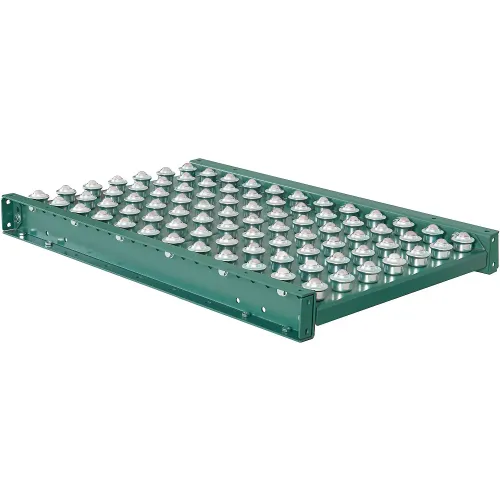
The Ball Transfer Table 3FT 21″ is a heavy-duty material handling solution designed to streamline the movement of boxes, cases, and pallets across warehouse floors, manufacturing facilities, and distribution centers. This roller table utilizes precision ball transfer units to enable smooth, multi-directional movement with minimal operator effort, making it an essential tool for optimizing workflow in logistics and production environments.
Built for demanding industrial applications, the Ball Transfer Table 3FT 21″ features a robust steel frame construction capable of supporting loads up to 880 lbs, making it suitable for transferring standard shipping containers, automotive parts, and packaged goods. The 3-foot length and 21-inch frame width provide an optimal footprint for integration into existing conveyor systems, assembly lines, and material handling stations. The ball transfer unit technology—featuring recirculating ball bearings housed in the table surface—enables 360-degree movement with exceptional load distribution and minimal friction. The table’s low-profile design facilitates easy loading and unloading at waist height, reducing strain and improving ergonomics for warehouse personnel. The durable powder-coat finish resists corrosion and wear, extending the service life of the equipment in high-traffic environments.
This ball transfer table serves manufacturers, third-party logistics (3PL) providers, warehousing operations, and distribution centers that require flexible material handling solutions. Common applications include order fulfillment stations, assembly line workstations, cross-dock operations, and packaging areas where products must be moved safely without manual carrying. Food and beverage distributors, automotive suppliers, e-commerce fulfillment centers, and retail distribution networks depend on ball transfer tables to maintain productivity while reducing labor costs and workplace injuries. The product is equally valuable in light manufacturing, where precision positioning of components and sub-assemblies streamlines production workflows.
When evaluating ball transfer tables for your facility, consider several critical factors: load capacity relative to your typical product weight, ensuring the 880 lbs rating aligns with your heaviest loads; table dimensions and how they integrate with adjacent conveyor systems or workstations; the ball transfer unit quality and bearing specifications, which directly impact smoothness and longevity; floor compatibility, including whether your floors are level and whether the table requires locking casters or permanent installation; and maintenance requirements, including lubrication schedules and bearing replacement intervals. Additionally, assess whether you need optional features such as adjustable height configurations, integrated braking systems, or custom sizing to fit your workspace. Review the coefficient of friction between your products and the ball transfer surface to ensure safe movement without slipping. Consider future scalability—whether you’ll need multiple units linked together—and verify that your chosen table meets OSHA standards for material handling equipment.
What size loads can the Ball Transfer Table 3FT 21″ safely handle?
The table is rated for a maximum load capacity of 880 lbs, with the load distributed across the ball transfer units. This capacity accommodates most standard shipping boxes, cases, and small pallets. For optimal performance and equipment longevity, avoid consistently loading at maximum capacity; aim for 70-80% of rated capacity during regular operations. The actual safe working load may vary depending on load distribution—concentrated weight on a single ball transfer unit may cause premature wear, so distribute weight evenly across the table surface. If your applications regularly approach 880 lbs, consider using multiple tables in tandem or upgrading to a higher-capacity model.
How do I maintain the ball transfer units to ensure smooth operation?
Proper maintenance extends the life of your ball transfer table significantly. Inspect the ball transfer units regularly for debris, dust, or product residue that may accumulate around the bearing surfaces. Use compressed air to clear debris from around each ball transfer unit. Depending on your operating environment and frequency, apply lightweight machine oil or bearing-specific lubricant to the ball transfer units every 3-6 months—follow the manufacturer’s lubrication guidelines included with your table. Avoid over-lubricating, which can attract dirt and grit. Check that the table surface remains level and that the mounting bolts remain tight; vibration from frequent use may cause fasteners to loosen over time. For wet or food-grade environments, consider models with sealed ball transfer units that offer enhanced protection against moisture and contamination.
What is the difference between ball transfer tables and roller tables?
Ball transfer tables feature recirculating ball bearings that allow 360-degree omnidirectional movement, enabling operators to push loads in any direction with equal ease. Roller tables use cylindrical rollers oriented in a single direction, restricting movement primarily along the roller axis. Ball transfer tables excel in applications requiring frequent directional changes, such as order-picking workstations and assembly areas, while roller tables are better suited for linear conveyor applications where products move consistently in one direction. Ball transfer tables typically provide smoother, quieter operation and distribute weight more evenly, but may cost more




Reviews
There are no reviews yet.