
Description
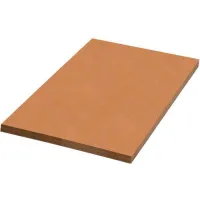
Single Wall Corrugated Sheets are lightweight, durable cardboard panels measuring 48 inches long by 30 inches wide, ideal for creating custom-sized shipping boxes, protective dividers, and packaging inserts. These kraft corrugated sheets come in convenient 5-pack quantities and serve as essential components for businesses requiring flexible, cost-effective packaging solutions without committing to pre-made box inventory.
Each sheet in this package features single-wall corrugated construction, which combines an outer kraft liner, a fluted corrugated medium, and an inner kraft liner to create a strong yet lightweight structure. The 48″ x 30″ dimensions provide substantial coverage area, allowing users to cut multiple smaller panels or create large protective barriers with minimal waste. The natural kraft finish delivers professional appearance suitable for branded packaging, while maintaining excellent crush resistance and edge crush strength (ECT) for protecting contents during storage and transit. These sheets resist moisture adequately for standard warehouse and logistics environments, and the corrugated design provides inherent cushioning properties that absorb impact without requiring additional padding materials. The 5-pack quantity ensures adequate supply for medium-volume operations while remaining cost-efficient compared to bulk rolls.
End users include e-commerce fulfillment centers, third-party logistics (3PL) providers, food and beverage distributors, automotive parts suppliers, and small-to-medium manufacturing operations that require custom box fabrication capabilities. Common applications include creating protective dividers between fragile items, constructing box liners and corner boards, manufacturing returnable transit containers, forming product-specific packaging inserts, and assembling protective corner protectors for shipping pallets. Retail operations use corrugated sheets for point-of-sale displays and shelf packaging, while warehouses leverage them for organization and inventory protection. The versatility of sheet format—compared to rolls or pre-fabricated boxes—makes these materials invaluable for operations requiring frequent packaging design modifications or unique sizing specifications.
When purchasing corrugated shipping sheets, consider several critical factors beyond basic dimensions. Board caliper (thickness) affects both protection level and shipping weight; single-wall construction at standard specifications balances protective capability with postage economy. Verify flute type—while single-wall sheets typically use C-flute or B-flute corrugation—as this impacts cushioning characteristics and stacking strength. Basis weight and bursting strength determine overall durability; heavier sheets resist puncturing but increase dimensional weight charges. Consider whether recycled content aligns with your sustainability requirements, and confirm moisture resistance specifications if products face humidity exposure. Evaluate cutting capabilities required—sheets that score cleanly without delamination reduce waste and labor costs. Compare per-sheet pricing against alternative formats like corrugated rolls or pre-cut blanks to ensure true cost-effectiveness for your volume and application. Finally, confirm storage conditions requirements and shelf life, as corrugated materials can absorb ambient moisture and lose structural integrity over extended periods in poor conditions.
What size corrugated sheets should I order for custom box making?
The 48″ x 30″ size offers excellent versatility for custom fabrication. For small boxes (under 12 inches per dimension), you can cut 8-16 panels from a single sheet, making this format economical for diverse product sizes. If your standard boxes consistently require panels larger than 24″ x 30″, you may want to consider larger sheet sizes or corrugated rolls instead. Calculate your typical panel dimensions first, then model cutting layouts on 48″ x 30″ sheets to determine waste percentages and true per-unit costs before ordering.
How do I cut and fold corrugated sheets for box construction?
Single-wall corrugated sheets cut cleanly with utility knives, rotary cutters, or industrial cutting equipment when scoring lines are pre-marked. For folding along flute direction (parallel to corrugations), the sheets bend smoothly; for cross-flute folding (perpendicular), you may need to score or use specialized folder equipment to prevent cracking. Many businesses use computerized cutting tables that simultaneously score, cut, and perforate sheets for immediate box assembly. Hand tools work for small quantities, but volume operations benefit from dedicated corrugated cutting and converting equipment that ensures precise, repeatable results.
What is the difference between single-wall and double-wall corrugated sheets?
Single-wall corrugated (this product) uses one fluted layer between two kraft liners, providing adequate protection for lightweight to medium-weight items while maintaining reasonable flexibility and cost. Double-wall corrugated uses two fluted layers with three kraft liners total, delivering substantially greater compression strength, puncture resistance, and stacking capacity for heavy items or multiple-depth pallet stacking. Single-wall suffices for most general packaging applications and offers 30-40% cost savings; double-wall becomes necessary


Reviews
There are no reviews yet.