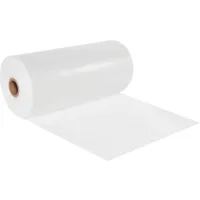
Description
Poly tubing is a flexible, transparent plastic sheeting product wound into a continuous roll, designed for wrapping, protecting, and bundling items during storage and shipment. This 4-inch wide by 2,150-foot length roll of 2-mil clear polyethylene tubing is an essential packing material for warehouses, distribution centers, manufacturing facilities, and e-commerce operations that require reliable, cost-effective protection for fragile goods and bulk items.
This poly tubing roll delivers exceptional value through its combination of gauge thickness, dimensional capacity, and material durability. The 2-mil thickness provides adequate puncture resistance and tear strength for standard protective applications while maintaining flexibility for easy handling and conforming to irregular product shapes. At 4 inches wide and 2,150 feet in total length, a single roll covers approximately 717 linear feet when laid flat, or offers 1,075 square feet of protective surface area—sufficient for medium to large-scale shipping operations. The clear polyethylene composition allows visibility of contents without unwrapping, streamlining inventory verification and quality control processes. The plastic tubing resists moisture, mild chemicals, and temperature fluctuations, making it suitable for both climate-controlled warehouses and standard industrial environments. The continuous roll format eliminates waste from pre-cut sheets and allows operators to custom-cut lengths as needed using standard cutting equipment or hand tools, maximizing material efficiency and reducing per-unit costs for high-volume users.
Poly tubing in this specification serves diverse industrial and commercial sectors. E-commerce fulfillment centers use poly tubing extensively to wrap merchandise bundles, create protective barriers around delicate electronics, glassware, and artwork, and secure multi-pack shipments. Manufacturing facilities employ poly tubing as a barrier against dust contamination, moisture exposure, and minor impact damage during component storage and inter-facility transport. Food and beverage distributors utilize food-grade or general-purpose poly tubing to protect products from environmental contaminants while maintaining package visibility. Automotive parts suppliers wrap individual components and assemblies to prevent corrosion and damage. Retail distribution networks use poly tubing for bundling promotional items, creating bulk packages, and protecting merchandise during the distribution chain. Agricultural and horticultural suppliers leverage poly tubing for protecting seeds, tools, and equipment. The transparent nature of this product makes it particularly valuable in operations where visual product identification and damage inspection are critical to operational efficiency.
When selecting poly tubing for your operation, consider several critical factors. Gauge and mil thickness directly correlates with puncture resistance and durability—2-mil tubing suits moderate protection needs, while heavier gauges (3-4 mil) accommodate sharper edges or longer storage periods. Evaluate your width requirements relative to your typical item dimensions; 4-inch tubing works well for narrow products, while wider applications may require larger rolls or overlapping wrapping. Assess the total linear footage needed annually to determine roll quantity and storage space requirements. Confirm whether your application requires food-contact certification or compliance with specific industry standards such as FDA or USDA regulations. Consider the storage conditions in your facility—poly tubing maintains flexibility in standard temperatures but may become brittle in extremely cold environments. Test the unwind tension and cutting characteristics with your existing equipment to prevent jamming or tearing during high-speed operations. Calculate your actual cost per square foot by comparing total roll price against usable coverage area to ensure accurate budget allocation.
What size poly tubing do I need for wrapping standard shipping boxes?
For most standard shipping boxes ranging from 12″ to 24″ in width, 4-inch poly tubing provides adequate coverage when wrapped around package height or width. However, if you regularly ship boxes exceeding 18 inches in any dimension, consider upgrading to 6-inch tubing to minimize overlap and reduce material consumption. Measure your most common box dimensions and consult the tubing width-to-perimeter ratio to determine optimal coverage efficiency.
How do I calculate how much poly tubing I need annually?
Determine your average monthly shipment volume, measure the average wrapping length required per item (typically 1.5 to 3 times the item perimeter for adequate overlap), then multiply by monthly volume and divide by roll length (2,150 feet). For example, if you wrap 5,000 items monthly at 15 feet of tubing per item, you need 75,000 feet monthly, or approximately 35 rolls at 2,150 feet per roll. Add 15-20% to this calculation for waste, testing, and operational contingencies.
What is the difference between 2-mil and 3-mil poly tubing for industrial applications?
2-mil tubing offers superior flexibility, easier cutting, and lower material cost, making it ideal for general wrapping, light bundling, and moisture protection where sharp



Reviews
There are no reviews yet.