Description
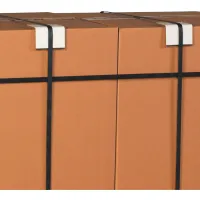
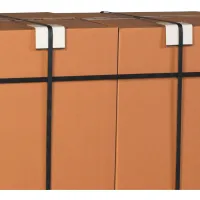
Light Duty Strapping Protectors are rigid plastic corner guards designed to protect merchandise and packaging from damage caused by strapping tension during shipping and storage. These corner protectors distribute compression force evenly across sharp edges and corners, preventing strap cut-through, product marring, and structural compromise of packaged goods.
Each protector measures 4 inches in length, 3 inches in height, and 3 inches in depth with a 0.225-inch wall thickness, making them ideal for securing loads of varying sizes. The white color provides visibility for quality control and warehouse operations, while the rigid polyethylene construction resists environmental stress, moisture, and temperature fluctuations. This bulk pack of 300 units offers cost-effective protection per application, allowing consistent strapping practices across high-volume shipping operations. The edge-guard design fits seamlessly over package corners where strapping bands intersect, creating a protective barrier that extends the lifespan of your strapping materials and reduces damage claims. These polypropylene corner protectors are engineered to work with standard steel strapping, plastic strapping, and polyester strapping widths up to 3 inches.
Manufacturing facilities, warehouses, distribution centers, and logistics operations rely on strapping corner protectors to safeguard palletized loads during transit. Third-party logistics providers, food and beverage distributors, automotive suppliers, and chemical manufacturers use these guards to meet shipping damage reduction standards. E-commerce fulfillment centers implement corner protection protocols to minimize customer returns caused by damaged goods. Heavy equipment shippers, construction material distributors, and appliance retailers depend on edge protectors to prevent costly product defacement. The load stabilization benefits of proper corner protection reduce shrink, insurance claims, and customer dissatisfaction. Applications include protecting corrugated cardboard boxes, wooden crates, plastic totes, composite containers, and bundled materials where strapping bands create concentrated pressure points.
When selecting strapping protectors, evaluate your specific load dimensions, strapping material type, and shipping distance to determine optimal corner guard sizing. Consider the durability requirements of your products—fragile items benefit from thicker protective barriers, while rigid goods may need standard-thickness guards. Assess your strapping tension settings; higher-tension applications warrant more robust corner protection to prevent strap bite-through. Bulk pack quantities should align with your monthly shipping volume to ensure inventory freshness and cost efficiency. Verify compatibility between guard dimensions and your strapping applicator equipment to prevent jamming or misalignment. Review your current damage claim data to identify problem areas where corner protection could deliver the greatest return on investment. Temperature and humidity conditions in your storage environment may impact polyethylene performance, so select accordingly for your climate zone. Compare the cost-per-application of different pack sizes and thicknesses against your damage reduction targets.
What size strapping protector do I need for my application?
The 4″L x 3″H x 3″D dimensions of these light duty protectors are designed for standard pallet loads and carton stacks with strapping widths up to 3 inches. Measure your package corner configuration and strapping band placement to ensure the protector fully covers the contact area where the strap contacts your load. For boxes measuring 24″ x 20″ x 18″, these 3″ x 3″ corner guards will adequately protect the edges. If you’re strapping bundles, composite materials, or non-standard shapes, verify that the 4-inch length provides sufficient coverage along your strap’s cross-section points. Consult your strapping applicator’s specifications for recommended protector sizing to avoid equipment feed problems.
How do I install strapping protectors on my palletized loads?
Strapping protectors are positioned before or during the strapping process at all four corners where strapping bands intersect with your load. Manual application involves placing the protector over the package corner, aligning it so the strapping band passes through the center, then securing with your standard strapping equipment. Automatic strapping lines can integrate corner protectors through feed mechanisms that position guards before the strap tensioning stage. Ensure protectors are seated firmly against the load surface to prevent shifting during transit. For loads with multiple tiers, apply protectors to each tier’s corners for comprehensive protection. The rigid design allows you to apply protectors in any orientation your load configuration requires.
What is the difference between light duty and heavy duty strapping protectors?
Light duty strapping protectors like this 0.225-inch thickness model are optimized for standard shipping distances, domestic transport, and lower-compression loads. They provide excellent cost efficiency for high-volume applications while protecting against normal strap cut-through and environmental damage. Heavy duty protectors feature thicker walls (typically 0.375 inches or greater) and reinforced corner angles for extreme-load shipping, international transport, extended storage, or loads subject to rough handling. Heavy duty options resist greater compression forces and environmental stress but cost more per unit. Assess your shipping conditions, product fragility, strapping tension settings, and damage history to determine whether light or heavy duty protection meets your requirements and budget constraints.




Reviews
There are no reviews yet.