
Description
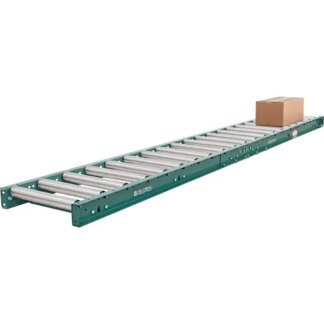
The Gravity Roller Conveyor 10FT 21″ 6″ Axle is a straight-section unpowered conveyor system designed to move products downhill using gravitational force without electrical input. This industrial-grade roller conveyor is ideal for warehousing, distribution centers, and manufacturing facilities that need reliable, cost-effective material handling for lightweight to moderate-weight items.
Key specifications make this gravity roller conveyor a workhorse for your facility’s layout. The 10-foot length provides substantial conveying distance while remaining compact enough for standard dock configurations. The 21-inch frame width accommodates boxes, cartons, and packages typical in e-commerce and logistics operations. The 6-inch axle center distance (roller spacing) ensures stable product support without excessive load concentration on individual rollers. With an 80 lbs/ft load capacity, this system handles cases and containers up to approximately 800 pounds total distributed weight—suitable for general merchandise, apparel, small parts kits, and non-hazardous goods. The gravity-driven operation eliminates motor costs, reduces maintenance requirements, and provides smooth, consistent product flow when installed at the proper decline angle. Each roller is mounted on sealed bearings to minimize friction and extend service life in demanding warehouse environments. The sturdy steel frame construction withstands daily wear while the individual rollers rotate freely to prevent product jamming and damage.
Gravity roller conveyors serve diverse industrial applications across multiple sectors. 3PL warehouses and fulfillment centers use these systems to sort and stage shipments with minimal operational overhead. Manufacturing plants integrate them into production lines for subassembly movement and finished goods consolidation. Retail distribution centers rely on gravity conveyors to feed packing stations and shipping docks. Food and beverage distributors (non-perishable items) utilize them for case handling and order fulfillment. Automotive parts suppliers move components through assembly lines and staging areas. Pharmaceutical and medical device warehouses employ these systems for secure, organized product flow. The simplicity of gravity-powered systems makes them ideal for facilities seeking to reduce energy consumption and equipment complexity while maintaining consistent throughput in high-volume operations.
When selecting a gravity roller conveyor system, several factors warrant careful consideration. Incline angle is critical—typically 3 to 5 degrees for optimal flow depending on product weight and friction characteristics; insufficient angle causes product backup, while excessive angle creates runaway hazards. Product weight and dimensions must align with the specified load capacity and roller spacing to prevent damage or operational failure. Installation location determines whether you need additional support legs, side rails, or height adjusters to integrate seamlessly with existing equipment. Material compatibility matters—consider whether your products require protective roller covers to prevent marking or contamination. Maintenance accessibility ensures you can easily clean, adjust tension, and replace worn rollers without extensive downtime. Modular expandability allows future extension if your facility’s needs grow. Verify that your facility’s structural integrity supports the combined weight of the conveyor and maximum product load to ensure worker safety and equipment longevity.
What size rollers does this 10FT gravity conveyor system use, and how do I determine if they’ll accommodate my products?
This model features standard 6-inch diameter rollers with 21-inch spacing between frame rails. The 6-inch axle center distance creates reliable support for products ranging from small boxes (6+ inches wide) to standard-sized cases and cartons. To verify compatibility, measure your product’s smallest dimension perpendicular to the conveyor direction—it should exceed 6 inches to ensure at least two rollers support the load simultaneously, preventing tilting or tipping. For products smaller than 6 inches, consider adding roller covers or product guides to the conveyor frame.
How do I calculate the correct installation angle for my gravity conveyor to ensure smooth product flow?
Proper incline depends on product weight, surface friction, and roller condition. Begin installation at a 3-degree angle (approximately 5 inches of vertical drop per 10 feet of horizontal length). Test product movement—if items don’t flow smoothly or stop midway, gradually increase the angle to 4 or 4.5 degrees. For heavier items (approaching the 80 lbs/ft capacity), use the lower end of this range; lighter products may require 5 degrees. Maintain consistent decline across the entire 10-foot length, and use adjustable feet or shims to fine-tune the slope. Never exceed 6 degrees, as excessive angles create safety hazards and product damage from impact at the downstream end.
What is the difference between gravity roller conveyors and powered roller conveyors, and when should I choose gravity over powered?
Gravity roller conveyors rely


Reviews
There are no reviews yet.