Description
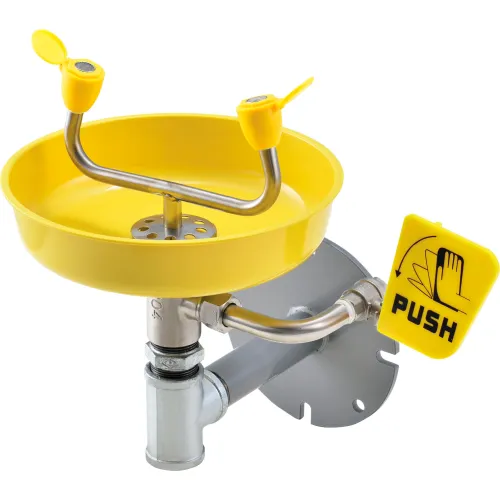
The EYEWASH STATION WALL MOUNT is a fixed emergency eyewash station designed for immediate chemical splash response and eye contamination treatment in industrial, laboratory, and manufacturing environments. This wall-mounted unit provides rapid access to tepid flushing fluid, meeting critical ANSI Z358.1-2014 compliance requirements for workplace safety.
This eyewash station features a push handle activation mechanism that delivers hands-free operation, allowing workers to quickly initiate fluid flow without complex operation steps during emergency situations. The unit is engineered with a wall mount configuration that optimizes facility space while maintaining accessibility within the required travel distance from hazardous work areas. The station delivers a dual eyecup design with adjustable nozzles to accommodate different facial sizes and ensure complete eye coverage. Built-in drip shields direct excess liquid away from the user’s face and clothing, reducing secondary discomfort during flushing procedures. The system includes flushing fluid capacity sufficient for sustained 15-minute continuous operation per ANSI standards, with replaceable cartridges for easy maintenance. The corrosion-resistant housing materials withstand industrial environments, chemical vapors, and temperature fluctuations. A inspection tag holder accommodates compliance documentation, and the alarm whistle alerts nearby personnel during activation.
This emergency eyewash station serves facilities across manufacturing, chemical processing, pharmaceutical production, automotive service centers, metal fabrication shops, semiconductor assembly, water treatment plants, and research laboratories. Safety managers specify wall-mounted eyewash stations for workstations where chemical splashes pose significant eye injury risk, including areas handling acids, solvents, corrosive liquids, and particulate contaminants. First responders and occupational health professionals recommend these stations in compliance audits for OSHA regulations, industrial hygiene programs, and workplace injury prevention initiatives. Facilities with hazardous material storage, chemical handling operations, or reactive substance processing require accessible eyewash stations as mandatory emergency response equipment. This equipment is essential in ISO 14644 cleanroom environments, GMP-regulated facilities, and operations requiring emergency preparedness certification.
When selecting an eyewash station, prioritize ANSI Z358.1 certification, which establishes minimum performance standards for flow rate (0.4 gallons per minute minimum), flushing duration, and water temperature maintenance. Consider installation location carefully—stations must be positioned within 10 seconds of potential exposure areas, clearly marked with illuminated signage, and unobstructed by storage or equipment. Evaluate mounting height specifications to ensure accessibility for all workforce members, typically 33-45 inches to eyecup centers. Compare flushing fluid compatibility with your specific chemical hazards; some operations benefit from sterile saline formulations or pH-balanced solutions over plain water. Assess maintenance requirements, including cartridge replacement frequency, inspection protocols, and training documentation. Review temperature conditioning features for climate-controlled delivery, particularly important in cold environments where inadequate water temperature can cause user avoidance during actual emergencies. Verify compatibility with existing facility water pressure systems and drainage infrastructure. Select models with visual flow indicators to confirm proper operation during testing cycles, and confirm the station includes collection trays for contained draining in contaminated environments.
What size eyewash station do I need for my facility?
The appropriate size depends on your facility footprint and worker distribution. A single wall-mounted eyewash station typically covers a service area of 50-100 feet in open workshop settings. Multi-station configurations are recommended for larger facilities or operations with multiple isolated hazardous work zones. Calculate based on the “10-second travel distance” standard—no worker should be more than 10 seconds of walking distance from an eyewash station. Industrial facilities exceeding 5,000 square feet with distributed chemical handling typically require multiple strategically positioned units.
How do I maintain and inspect my eyewash station?
Perform weekly flushing tests by activating the push handle for 5-10 seconds to verify proper operation and fluid delivery. Replace cartridges according to manufacturer specifications, typically annually or after activation. Log inspections using the provided inspection tag holder to document compliance. Examine the eyecup area monthly for mineral deposits or debris that might affect performance. Drain and refill systems before seasonal freezing in cold climates. Train staff on proper activation technique to ensure personnel can operate the station under stress during actual chemical exposure incidents.
What is the difference between eyewash stations and safety shower combinations?
Eyewash stations provide localized flushing for eye and facial splashes, delivering controlled flow to the ocular area. Safety shower combinations integrate overhead deluge showers for full-body chemical decontamination during major spill exposure. Eyewash stations are ideal for minor chemical splashes, dust particles,



Reviews
There are no reviews yet.