Description
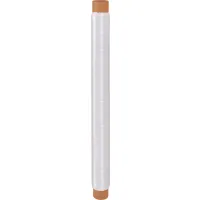
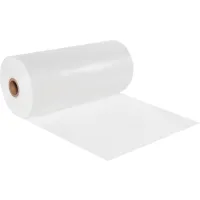
Poly sheeting is a lightweight, transparent plastic film designed for temporary protective covering and containment applications across industrial, construction, and warehousing environments. This 12-foot width by 200-foot length roll of 2-mil clear polyethylene delivers a cost-effective solution for moisture barriers, dust containment, equipment protection, and temporary enclosure needs in demanding operational settings.
This poly sheeting roll combines critical performance specifications that industrial buyers depend on: a 2-mil thickness that balances durability with flexibility, making it resistant to punctures while remaining easy to handle and install. The 12-foot working width provides substantial coverage for large surfaces, equipment, and work zones, while the 200-foot linear length delivers 2,400 square feet of usable material per roll, minimizing waste and reducing per-job material costs. The clear polyethylene construction maintains visibility for safety compliance while protecting contents from environmental exposure—moisture, dust, pollen, and debris. This sheeting is UV-stabilized for limited outdoor exposure, making it suitable for both interior climate control applications and short-term exterior protection. The material is non-toxic, odor-free, and food-contact safe when regulatory compliance is required, and it tears cleanly for custom sizing without fraying. The single-roll packaging format ensures convenient storage and handling, with the roll diameter optimized for standard equipment and logistics workflows.
End-users across construction, manufacturing, warehousing, agriculture, and logistics sectors rely on poly sheeting for mission-critical protection tasks. Construction crews use it for temporary containment walls, dust barriers during renovation and demolition projects, and moisture control in open-frame structures. Manufacturers deploy it for equipment protection during facility maintenance, vapor barriers in climate-sensitive operations, and temporary flooring protection in sensitive environments. Warehousing and distribution centers use poly sheeting as pallet wrap alternatives, product segregation barriers, and cleanroom separation solutions. Agricultural operations use it for crop coverage, pond liners, and equipment storage protection. Logistics and shipping departments rely on it for cargo wrapping, weatherproofing during transport, and load securing. The 2-mil thickness strikes an optimal balance for these applications—robust enough to withstand handling in high-traffic environments but thin enough to minimize material costs on large-scale projects.
When selecting poly sheeting for your operation, evaluate mil thickness based on reuse expectations and tear resistance requirements; 2-mil is industry-standard for single-use and short-term applications, while heavier gauges suit long-term installations. Verify dimensional specifications against your coverage needs—12-foot width is ideal for covering standard equipment, vehicles, and work zones without excessive overlap waste. Confirm UV exposure requirements if outdoor deployment exceeds 3–6 months; basic sheeting suits temporary use, while UV-stabilized formulations extend outdoor lifespan. Consider permeability characteristics—clear polyethylene allows condensation transmission, making it suitable for ventilated spaces, while laminated or reinforced options provide enhanced moisture barriers. Assess installation method compatibility with your team’s equipment: standard sheeting works with tape, staples, fasteners, and fastening systems. Review cost per square foot against project duration and reuse potential to justify bulk ordering. Verify regulatory compliance if applications involve food contact, pharmaceutical environments, or cleanroom specifications. Finally, evaluate storage conditions and shelf life—polyethylene maintains performance for years when stored in cool, dry environments away from direct sunlight.
What size projects does a 2,400 square-foot roll cover?
A single 200-foot roll provides 2,400 square feet of coverage, sufficient for covering a 12’W × 200’L area, or flexible configurations like a 24′ × 100′ space when overlapped and sealed. For a typical construction containment area, this covers approximately 600–800 linear feet of temporary barrier when installed at standard 4-foot height, or complete protection for equipment ranges like vehicle fleets, HVAC units, or machinery clusters in manufacturing facilities.
How do I install and secure poly sheeting in high-wind or high-traffic environments?
Install poly sheeting using reinforced fastening systems: industrial-grade tape (200+ mph rating), pneumatic staples into wood framing, or mechanical fasteners into metal structures. For temporary containment walls, overlap seams by 6 inches and seal with polyethylene tape or compatible adhesive. In high-wind zones, reduce unsupported spans by installing intermediate support poles every 10–15 feet.



Reviews
There are no reviews yet.