Description
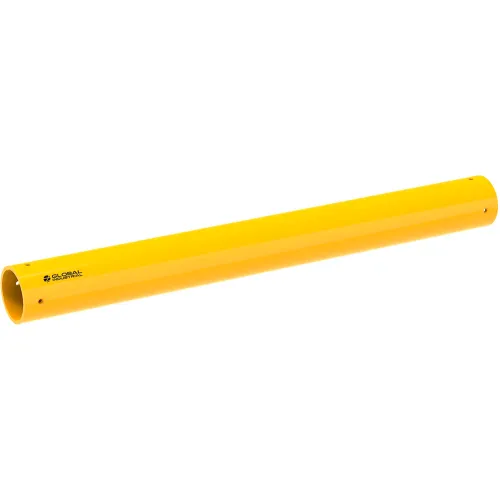
The Plastic Guard Rail Round 6L x 6D is a lightweight, impact-resistant protective barrier designed to safeguard warehouse materials, equipment, and infrastructure from vehicle collision damage. This round-profile guard rail provides cost-effective perimeter protection in high-traffic industrial environments where forklifts, pallet jacks, and other material handling equipment operate regularly.
Built from durable plastic composite material, this guard rail features a 6-foot length and 6-inch diameter round profile that absorbs and deflects vehicle impact without transferring force to protected assets. The lightweight construction—significantly lighter than steel alternatives—allows for easy installation and repositioning across multiple facility locations. Unlike rigid metal guard rails, the plastic formulation resists corrosion, requires minimal maintenance, and won’t rust or degrade when exposed to moisture, chemicals, or temperature fluctuations common in manufacturing plants, cold storage facilities, and outdoor loading docks. The round cylindrical design distributes impact force evenly, reducing damage concentration and extending product lifespan. The guard rail’s high-visibility profile makes it easily recognizable in busy warehouse environments, and the smooth plastic surface won’t catch on equipment or create snag hazards. Installation is straightforward—simply bolt or weld mounting brackets to existing structural supports, concrete floors, or equipment bases. The modular 6-foot sections allow flexible configuration for protecting machinery, storage racks, dock edges, column perimeters, and material staging areas.
Industrial facilities across manufacturing, logistics, retail distribution, automotive, pharmaceutical, and food processing sectors rely on plastic guard rail systems to protect valuable inventory, reduce operational downtime, and maintain OSHA compliance. Warehouse managers use round guard rails around loading dock perimeters to prevent backing accidents. Manufacturing plants install them around production machinery and conveyor systems. Cold storage and freezer facilities prefer plastic rails because they maintain integrity in sub-zero temperatures where metal becomes brittle. Outdoor storage yards, container yards, and port facilities deploy guard rails on concrete pads and asphalt surfaces where chemical de-icers and salt spray would corrode traditional steel alternatives. Hospitals, pharmaceutical cleanrooms, and food processing plants choose plastic systems because they meet sanitation requirements, resist bacterial growth, and can be easily sanitized without rusting. E-commerce fulfillment centers with high-velocity forklift traffic install guard rails in grid patterns around workstations, conveyor infrastructure, and employee work zones. Automotive assembly plants use guard rails to protect expensive robotic equipment and parts inventory from collision damage.
When selecting plastic guard rail systems for your facility, evaluate several critical factors beyond initial purchase price. Assess the impact rating and energy absorption capacity—guard rails designed for high-speed forklift traffic require different specifications than those protecting stationary equipment in low-traffic areas. Consider the mounting method compatibility with your existing infrastructure; some facilities require bolt-down systems for concrete floors, while others need welded brackets or surface-mount options. Examine the material composition and UV resistance if guard rails will be exposed to sunlight, as inferior plastics become brittle and crack over time. Calculate the total linear footage and number of sections needed—6-foot lengths offer modularity, but corner sections and end caps may require separate ordering. Verify load-bearing capacity if the rail will support equipment weight or serve as a guide for vehicles. Review maintenance requirements and cleaning compatibility with your facility’s sanitation protocols. Confirm visibility and reflectivity standards meet your workplace safety regulations. Compare the temperature operating range with your facility environment—some plastic formulations perform poorly in extreme heat or cold. Finally, assess warranty coverage and replacement part availability to ensure long-term product support and cost predictability.
What size opening does the 6-inch diameter round guard rail protect?
The 6-inch outer diameter provides protection for openings and perimeters up to approximately 48 inches wide when sections are spaced appropriately. For machinery with tighter spacing requirements or narrow column protection, multiple sections may be installed parallel to each other. The round profile deflects vehicle impacts effectively across standard forklift mast widths (typically 24-48 inches). Larger perimeters require multiple 6-foot sections arranged in continuous runs or grid patterns.
How do I determine if I need plastic or steel guard rails for my warehouse?
Plastic guard rails outperform steel in corrosion-prone environments, freezing temperatures, and facilities requiring frequent sanitization. Steel offers superior impact resistance for extremely high-speed or heavy-load collision scenarios. Plastic is ideal for indoor warehouses, cold storage, outdoor covered areas, and facilities with moisture or chemical exposure. Steel suits outdoor uncovered yards and applications requiring maximum impact absorption. Many facilities use both materials in different zones—plastic for protected indoor areas and steel for harsh outdoor environments.
What is the difference between round and flat-profile guard rails?
Round-profile rails like this model distribute impact force uniformly across the cylindrical surface, reducing concentrated damage and extending service life. Flat or W-beam profiles direct force differently and may create catching points on equipment. Round rails provide superior aesthetics in customer-facing


Reviews
There are no reviews yet.